




 " alt="">


















Data & AI Insights

CorralData
Use AI to effortlessly answer any business questions from all your data.
CorralData MCP brings your business data and intelligence directly into Claude and other AI assistants
Build and share custom data applications powered by your connected data.
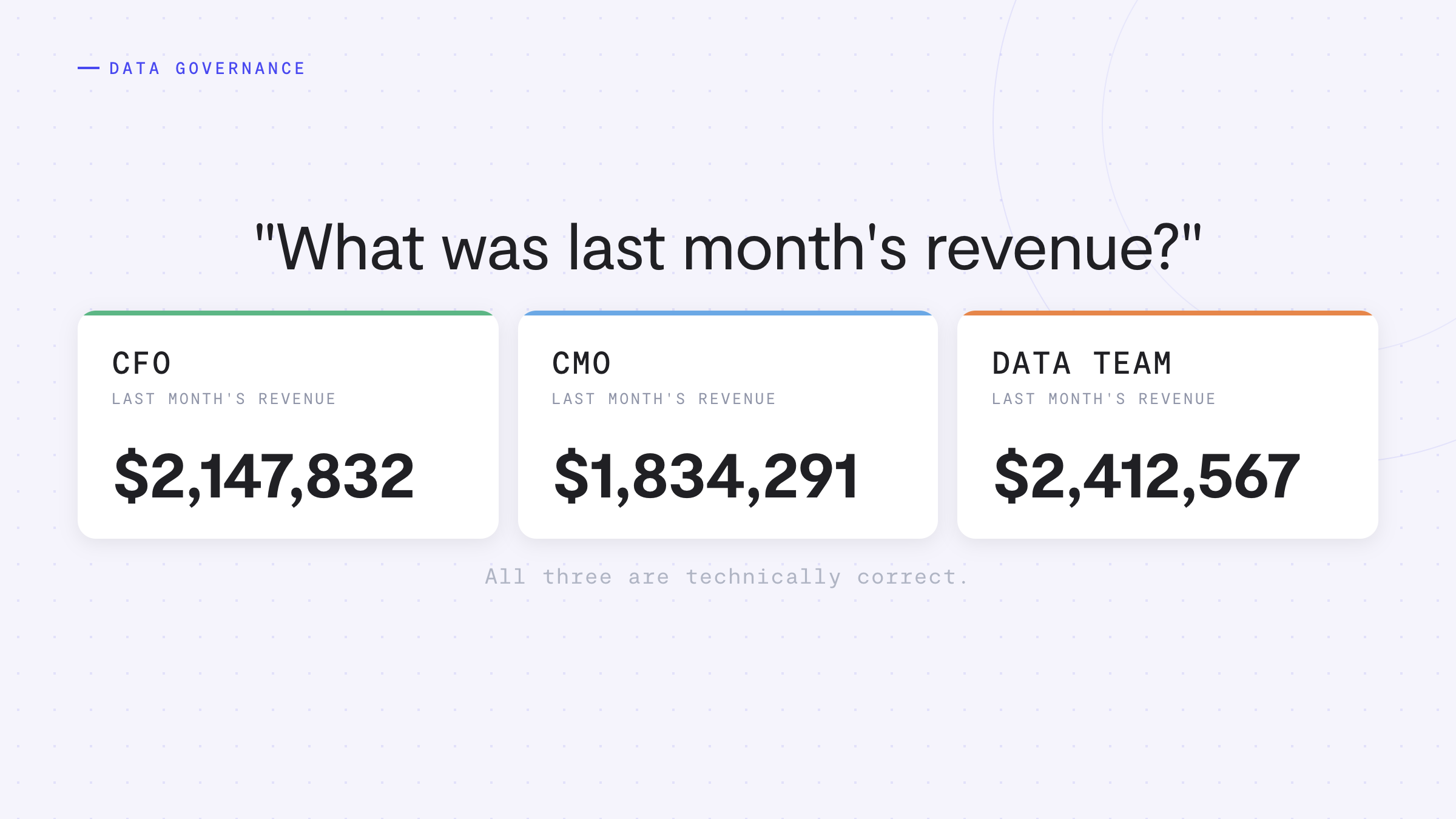
See where accuracy is won or lost across your data stack, and how a governed foundation changes the outcome.
Harness the power of AI without compromising on security.
A dedicated Technical Account Manager guides your team through it
Turn any dashboard into a clear, actionable summary in just one click
AI agents detect opportunities in your data and sync them across your platforms with our fully-managed Reverse ETL.
Sync data from 600+ sources, align KPIs, and see portfolio-wide results instantly.
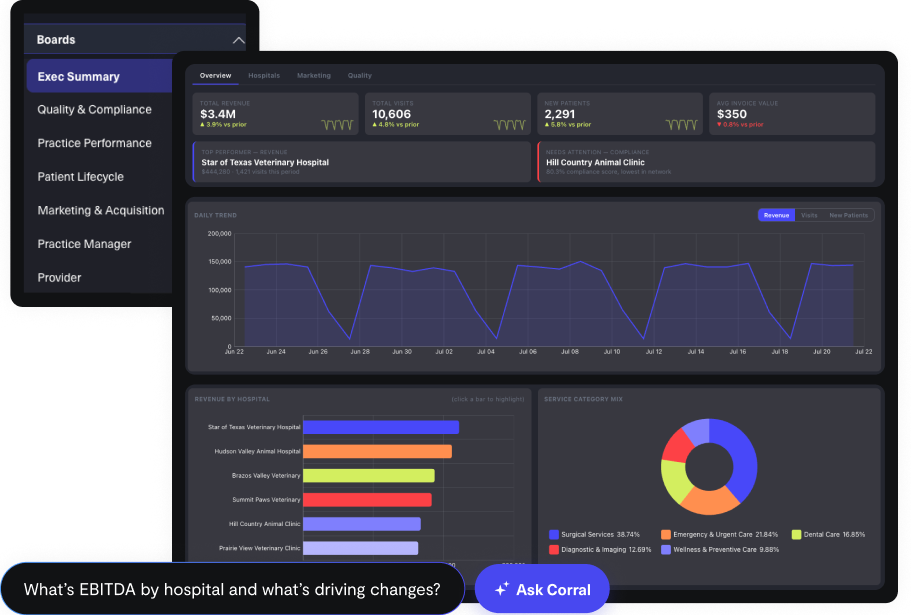
Give every role the same board, filtered to exactly what they're allowed to see.
Help your clients become data driven faster through seamless reporting and collaboration tools.
Grow your census and strengthen your bottom line with HIPAA-compliant analytics.
AI-powered analytics for dental practices and DSOs. Track production, case acceptance, patient recare, and marketing ROI.
Turn data into success with complete visibility of every consumer interaction.
Make data-driven decisions that enhance patient care and your bottom line.
HIPAA-compliant AI agents that optimize operations, marketing, and patient care across every med spa location.
AI-powered analytics for plastic surgery practices. Track consult conversion, surgeon performance, and marketing ROI.
AI agents that monitor, analyze, and optimize performance across every portfolio company.
Easily surface the data you need to increase sales and drive revenue.
Measure every hospital the same way and track compliance across your whole group.
See how AMP scaled profitability and enhanced patient care
See how CorralData & Evolve Results built ADVENT a true ROI engine
See how AMNH gained a better understanding of the ‘why’ behind their data
See how BodyLase unlocked full data visibility, enabling smarter marketing and stronger results
See how evolvetogether used AI-powered insights to shape a unified growth strategy
See how Geode Health unlocked the value of their data while protecting patient privacy
See how Engine identified and converted more high-value customers
See how AI and unified data drove revenue growth at Inspire Aesthetics
See how Lacoste boosted their e-commerce performance with AI-driven insights
See how Moon Juice used live insights to find, reach, and convert their best customers
See how Olympus uses data and AI to fuel growth
See how Options Medical Weight Loss maximized their LTV:CAC
See how Pfizer turned complex data into actionable marketing intelligence
See how Ready Set Rocket streamlined client reporting and unlocked actionable insights
See how Solo Stove measures true channel ROAS with a marketing mix model in CorralData
See how St. John Knits increased marketing efficiency by 50%
See how sweetgreen acquired new customers and built stronger relationships with their most loyal patrons

CorralData
With high-stakes care decisions on the line, you never want to operate in the dark, yet that’s the reality facing many behavioral health practices today.
Intake data points to rising demand. Staffing reports show limited capacity. Finance highlights margin pressure. None of the spreadsheets landing in your inbox are wrong, but without a unified view, it’s difficult to see how the pieces add up and impact the whole.
That’s where CorralData comes in. By unifying clinical, operational, marketing, and financial data in one clear view, CorralData helps behavioral health teams understand how demand, capacity, and margins interact so you can base decisions on the full picture, not scattered snapshots.
With unified, automated reporting and the right metrics, teams can act faster, intervene earlier, and scale in a way that’s both effective and sustainable. Below, we break down five metric categories that every behavioral health organization should be tracking to improve efficiency, protect margins, and expand access responsibly.
Reduce Friction at the Front Door 🤝
In behavioral health, access delays don’t just impact revenue, they can delay care altogether. Missed calls, long wait times, and stalled referrals represent lost opportunities to engage patients and can quietly compound into larger access gaps if not detected early.
In order for your data to tell the right story, you’ll need to set the scene: Start by tracking these top-of-the-funnel metrics to create an accurate data trail that you can work from.
Smart Metrics to Track
👉 Why it matters: Spot access bottlenecks early by tracking the right metrics, allowing teams to shorten time-to-care and increase patient loads without overextending clinicians or adding headcount.
Keep Patients Satisfied & Engaged 🧠
Patients power your practice, so early dropouts, missed sessions, and inconsistent attendance can severely undermine the progress and growth of your organization. Fortunately, this next set of metrics can help you spot the warning signs before any engagement issue gets out of control.
Smart Metrics to Track
👉 Why it matters: Engagement metrics reveal dropout risk before outcomes and revenue decline, enabling teams to intervene early, stabilize continuity of care, and protect both clinical results and program performance.
Scale Smart & Avoid Burnout ⚙️
As a leader, you want to set ambitious goals for growth, but you never want to sacrifice patient and clinical well-being in the process. It can be a difficult balance to strike for many behavioral health practices, so track the following metrics to achieve the unified visibility into staff capacity and workload you need to scale safely.
Smart Metrics to Track
👉 Why it matters: Workforce metrics identify capacity imbalances early, helping leaders rebalance caseloads, reduce burnout risk, and expand access without sacrificing clinician retention or quality of care.
Get to the Bottom of the Bottom Line. 💰
Behavioral health revenue is often delayed, payer-dependent, and operationally complex. Without clear financial visibility, your practice could end up quietly eating away at margin as you grow. Fortunately, it is now easier than ever to track this famously byzantine black box to keep you out of the red.
Smart Metrics to Track
👉 Why it matters: Financial KPIs uncover margin pressure and cash-flow risk early, allowing organizations to correct payer mix, address denials, and scale services based on real and relevant data.
Create a Shared View of Performance 📊
As behavioral health organizations expand across locations and levels of care, consistent reporting becomes more challenging. Decision-making slows as each new disconnected data stream enters the fray, limiting leaders’ ability to make confident decisions across locations.
Smart Areas to Track
👉 Why it matters: Standardized benchmarking ensures all teams are working from the same source of truth. This way, leaders can quickly identify top-performing programs, replicate what works, and course-correct before issues compound across locations.
Behavioral health organizations have more data than ever, and the opportunity now lies in bringing together disconnected sources into a single view that all teams can use.
When access, engagement, capacity, and financial performance live in one place, teams can approach problem-solving from a preventative standpoint rather than a reactive one, and make more confident decisions based on reliable, relevant data.
With the right metrics aligned across teams, behavioral health practices can:
The bottom line: Don’t dip into one more disconnected dashboard. Define your practice’s essential metrics and unify them in a single tool that all teams can access, understand, and act on.
Ready to make your behavioral health data work for you? Click here to book a demo and see CorralData in action.

CorralData


Make your data work for you. Book a demo today to see CorralData in action.

