



 " alt="">


















Data & AI Insights

CorralData
Use AI to effortlessly answer any business questions from all your data.
CorralData MCP brings your business data and intelligence directly into Claude and other AI assistants
Build and share custom data applications powered by your connected data.
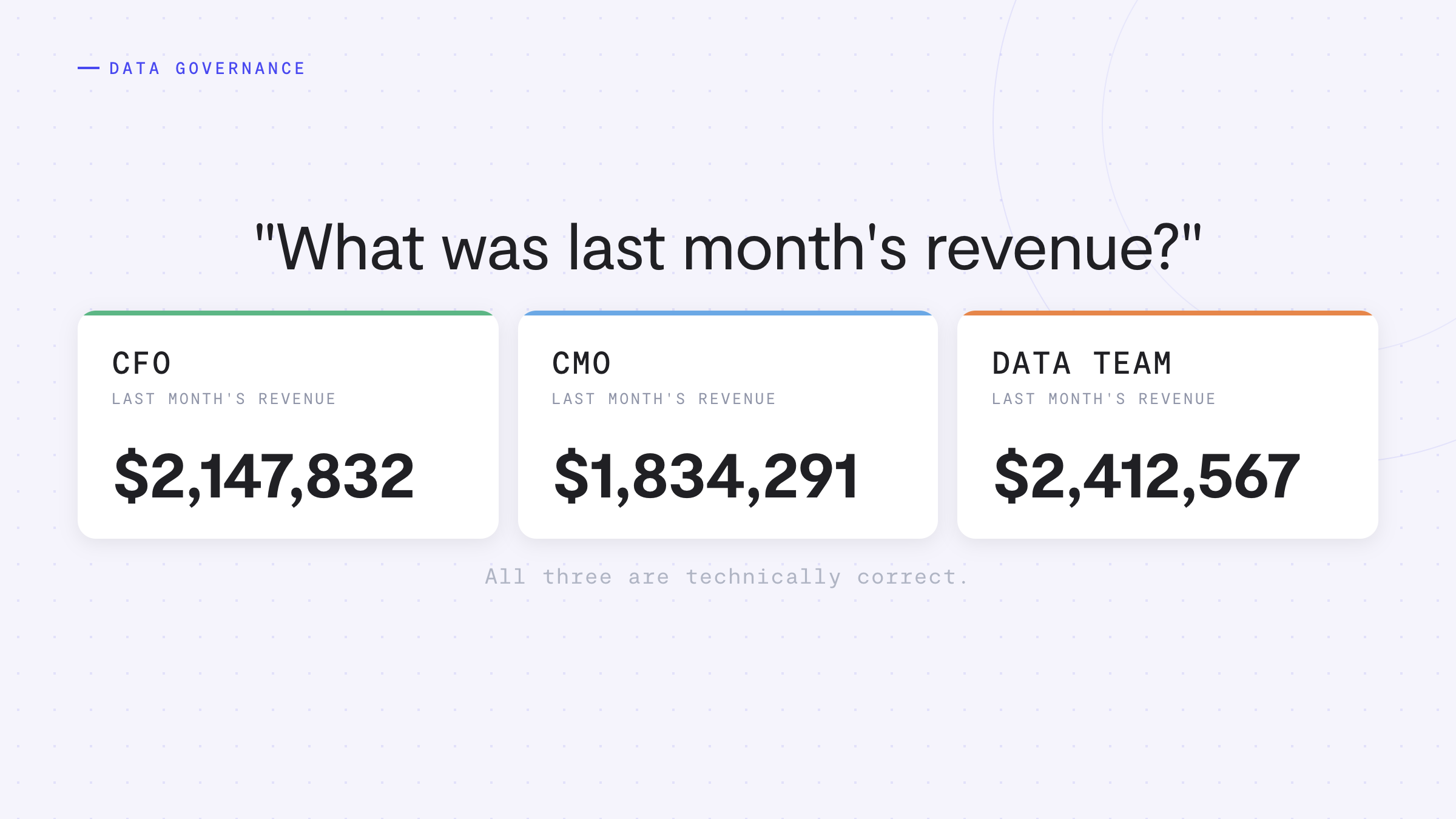
See where accuracy is won or lost across your data stack, and how a governed foundation changes the outcome.
Harness the power of AI without compromising on security.
A dedicated Technical Account Manager guides your team through it
Turn any dashboard into a clear, actionable summary in just one click
AI agents detect opportunities in your data and sync them across your platforms with our fully-managed Reverse ETL.
Sync data from 600+ sources, align KPIs, and see portfolio-wide results instantly.
Give every role the same board, filtered to exactly what they're allowed to see.
Help your clients become data driven faster through seamless reporting and collaboration tools.
Grow your census and strengthen your bottom line with HIPAA-compliant analytics.
AI-powered analytics for dental practices and DSOs. Track production, case acceptance, patient recare, and marketing ROI.
See medical, Mohs, and cosmetic performance across every clinic in one place.
Turn data into success with complete visibility of every consumer interaction.
Make data-driven decisions that enhance patient care and your bottom line.
HIPAA-compliant AI agents that optimize operations, marketing, and patient care across every med spa location.
See four-wall performance for every clinic and surgery center in one place.
AI-powered analytics for plastic surgery practices. Track consult conversion, surgeon performance, and marketing ROI.
AI agents that monitor, analyze, and optimize performance across every portfolio company.
Easily surface the data you need to increase sales and drive revenue.
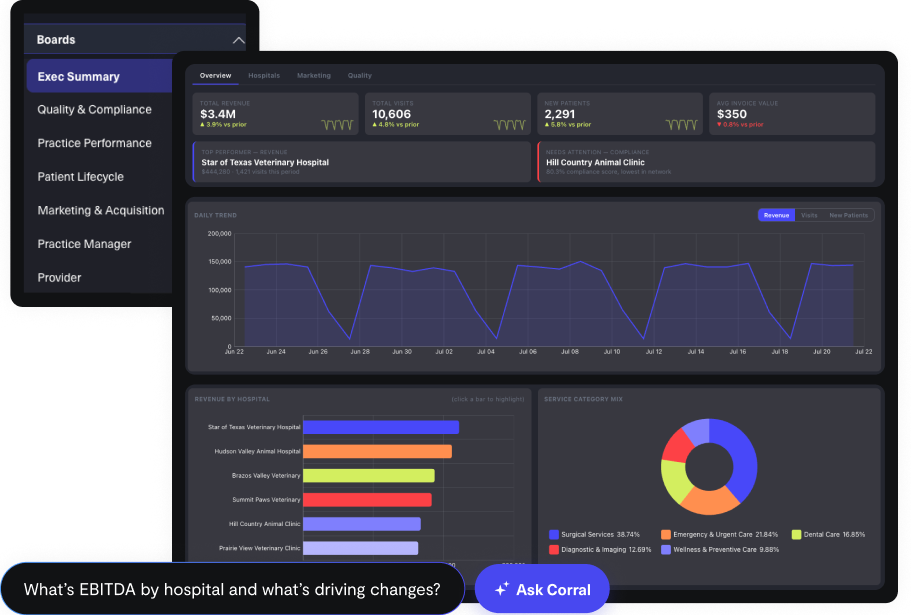
Measure every hospital the same way and track compliance across your whole group.
See how AMP scaled profitability and enhanced patient care
See how CorralData & Evolve Results built ADVENT a true ROI engine
See how AMNH gained a better understanding of the ‘why’ behind their data
See how BodyLase unlocked full data visibility, enabling smarter marketing and stronger results
See how evolvetogether used AI-powered insights to shape a unified growth strategy
See how Geode Health unlocked the value of their data while protecting patient privacy
See how Engine identified and converted more high-value customers
See how AI and unified data drove revenue growth at Inspire Aesthetics
See how Lacoste boosted their e-commerce performance with AI-driven insights
See how Moon Juice used live insights to find, reach, and convert their best customers
See how Olympus uses data and AI to fuel growth
See how Options Medical Weight Loss maximized their LTV:CAC
See how Pfizer turned complex data into actionable marketing intelligence
See how Ready Set Rocket streamlined client reporting and unlocked actionable insights
See how Solo Stove measures true channel ROAS with a marketing mix model in CorralData
See how St. John Knits increased marketing efficiency by 50%
See how sweetgreen acquired new customers and built stronger relationships with their most loyal patrons

CorralData
Many healthcare practices are sitting on mountains of data but lack the resources or bandwidth to extract actionable insights. In fact, 77% of health system executives say they don’t have an integrated analytics strategy, leaving inefficiencies unchecked and opportunities for improvement untapped.
The result? Lower margins, staff burnout, and inconsistent patient experiences.
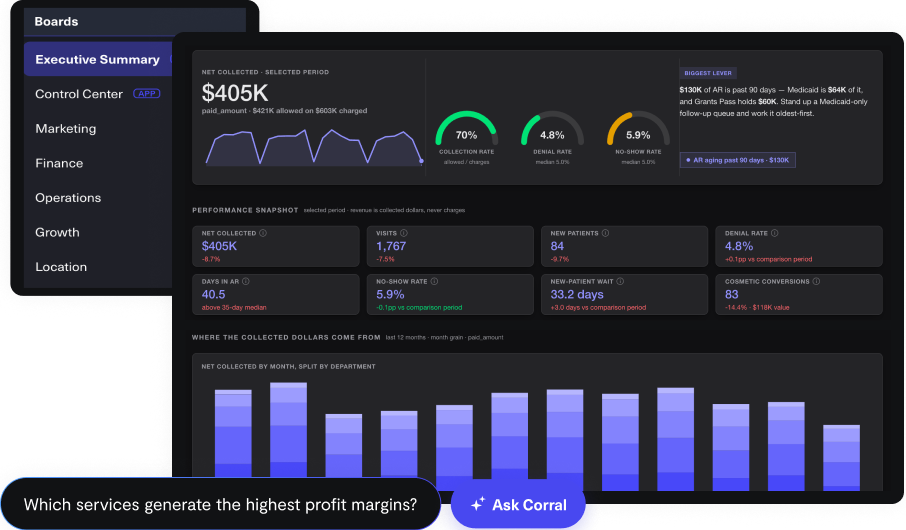
The good news: you no longer need a massive data team to change that. Modern analytics platforms like CorralData unify EMR, scheduling, billing, and patient-experience data to surface the metrics that matter most.
But technology alone doesn’t drive transformation — people do. When every team knows what to measure and why, performance, efficiency, and outcomes all improve. Below are five foundational KPI areas to help your teams align on performance, reduce waste, and strengthen patient outcomes.
From Procedures to Proven Outcomes
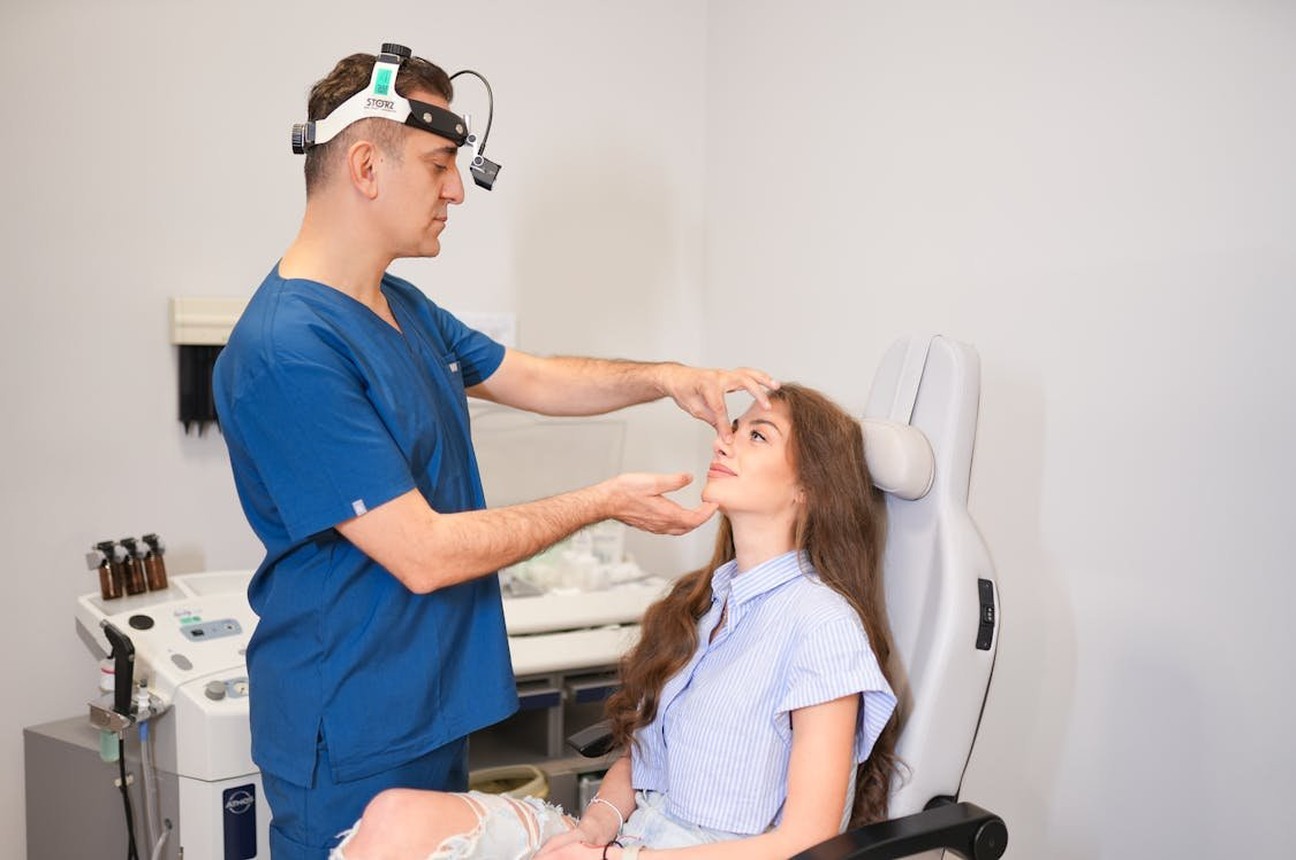
Whether you’re running a surgical practice or a MedSpa, patients expect visible, measurable results. Every provider wants better outcomes, but many don’t know where to begin. Tracking clinical quality KPIs will help identify variation, drive consistency, and validate where new processes or protocols truly improve care.
Smart Metrics to Track:
👉 Why it matters: Whether it’s recovery time after a procedure or results longevity after an aesthetic treatment, when teams can visualize these metrics — for example, through CorralData reporting that compare providers or treatment types — it turns anecdotal quality into actionable insight. You’ll know exactly where to celebrate wins and where to focus coaching or training.
Do More Good Without Burning Out Your Team ⚙️
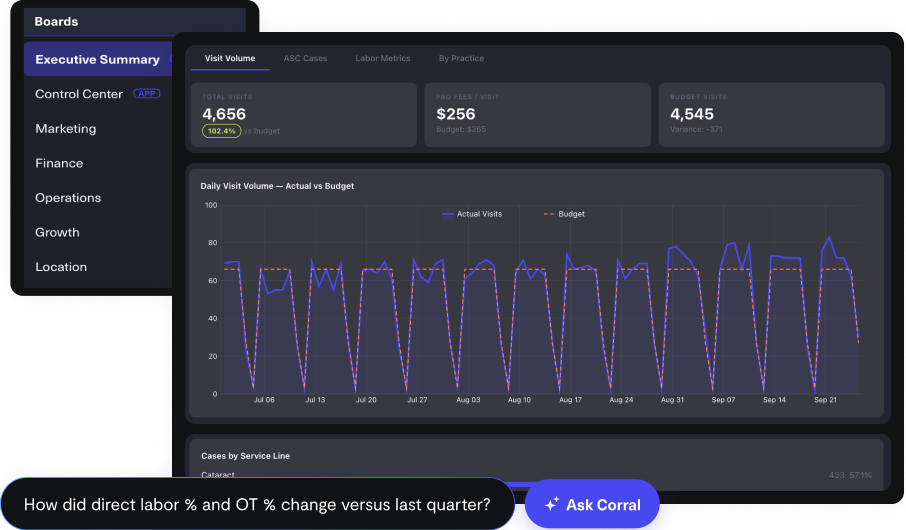
Your team is a product of its environment, and even the best clinicians can struggle within inefficient systems. Operational KPIs uncover how time, space, and staffing contribute to both revenue and care quality.
Smart Metrics to Track:
👉 Why it matters: Efficiency begins by achieving better operational balance. When you track utilization and idle time together, you can protect your staff from burnout while improving access and profitability.
Surpass Satisfaction to Achieve Loyalty 🤝
A single visit doesn’t build a sustainable practice. Engagement metrics reveal whether patients understand their care plans, follow through on appointments, and advocate for your practice.
Smart Metrics to Track:
👉 Why it matters: Engaged patients are healthier and more loyal. Tracking engagement KPIs helps you personalize outreach, invest in the right communication channels, and build relationships that sustain both outcomes and revenue.
Track the Health of Your Business, Not Just Your Patients 💰
Financial transparency is clinical sustainability. By connecting revenue metrics with care delivery data, you can see which services drive mission and margin — and which quietly drain resources.
Smart Metrics to Track:
👉 Why it matters: These KPIs show where efficiency meets sustainability. For example, CorralData users can often benchmark these figures across multi-site networks to guide investment and expansion decisions.
Turning Insight Into Everyday Action 👥
A metrics-driven culture thrives when data becomes part of the daily language. These KPIs measure how well your people engage with analytics and translate insights into improvement.
Smart Metrics to Track:
👉 Why it matters: When every role understands its KPIs, you replace guesswork with ownership. Teams feel empowered, not monitored — and performance improves organically.
Tracking metrics is just the first step; acting on the insights you glean from them is where true transformation begins.
With connected data and shared KPIs, healthcare teams can ALIGN, that is:
The bottom line? Don’t let data overload hold back your practice. With the right KPIs, and a single platform to visualize them, your entire organization gains clarity, accountability, and confidence.
Ready to see what a metrics-driven practice looks like? Click here to book a demo and see CorralData in action.
CorralData


Make your data work for you. Book a demo today to see CorralData in action.