New: The State of Aesthetics, Q3 2026 Industry Benchmark Report is out. Read the report

Featured case study

Olympus Cosmetic Surgery Group

Olympus Cosmetic Surgery Group is a private equity backed management services organization headquartered in Boca Raton, Florida, that acquires and scales cosmetic surgery practices across the United States. When Olympus came to CorralData, it operated four practices and eleven facilities, each with its own way of reporting. Patient, operational and marketing data sat across three AesthetixCRM instances, two ModMed environments, Salesforce and multiple ad platforms that did not connect with one another.

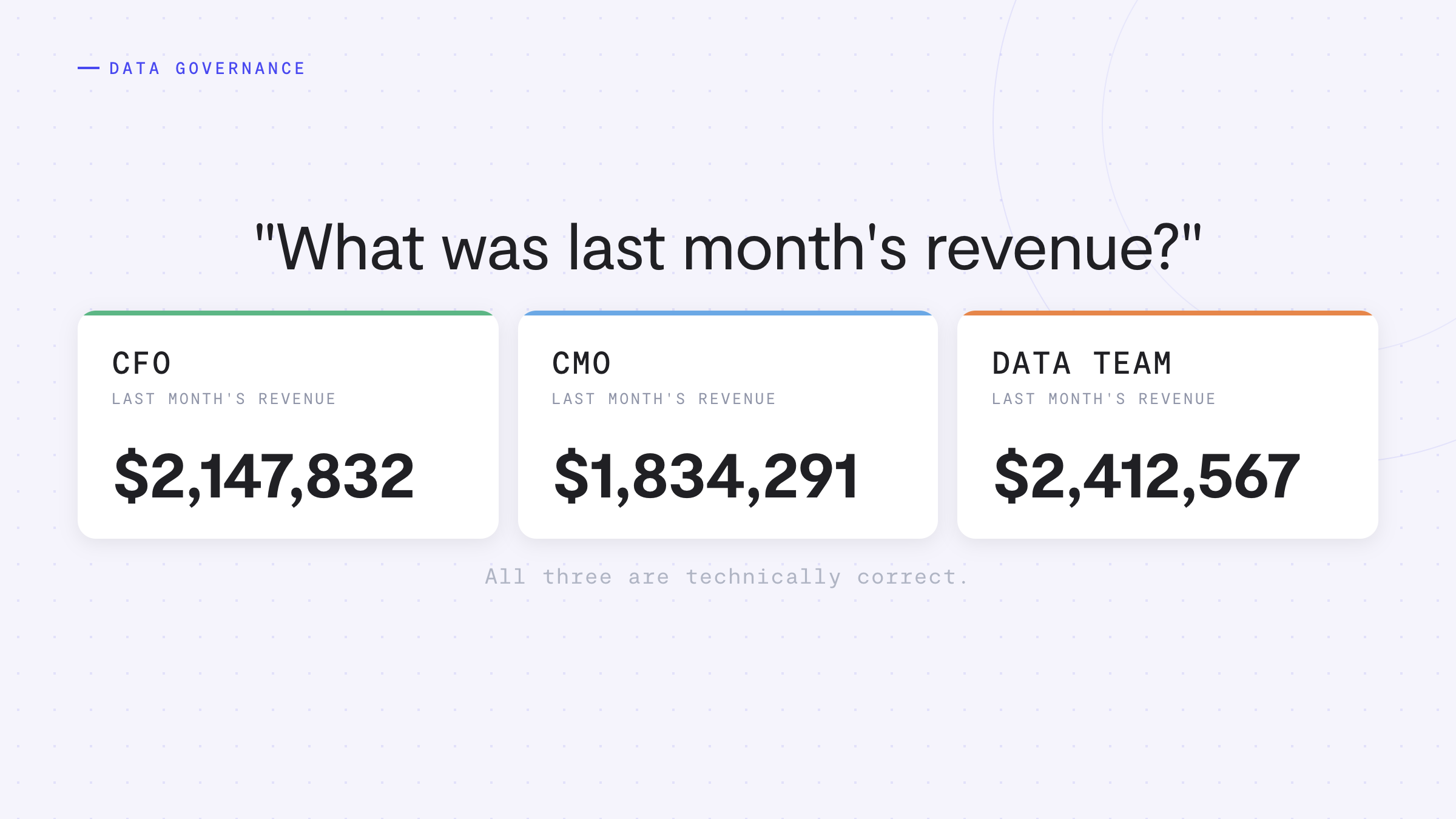
Leadership faced a question common to groups built through acquisition: how do you operate a portfolio when the data behind each practice lives in systems that were never designed to be compared?

Olympus Cosmetic Surgery Group case study
Top integrations
  • AesthetixCRM logoAesthetixCRM
  • ModMed logoModMed
  • Salesforce logoSalesforce
  • Nextech logoNextech
  • Google Ads logoGoogle Ads
  • Meta Ads logoMeta Ads
  • Google Analytics 4 logoGoogle Analytics 4
Top features
  • Funnel Conversions Dashboard
  • Surgeon Utilization Board
  • Revenue & Financial Reporting
  • AskCorral

Key metrics

  • Lead-to-Procedure Conversion Rate
  • OR Utilization Rate
  • CAC
  • 90-Day Revenue Forecast
  • Average Procedure Value

Challenge

A growing portfolio with no unified view of the funnel

Cosmetic surgery has longer lead times than many other healthcare services. A patient who inquires today may not reach the OR for another 60 or 90 days. Between the first lead, the consult, the surgery booking and the completed procedure, visibility can break down at any step.

At Olympus, that journey crossed four practices, eleven facilities, three AesthetixCRM instances, two ModMed environments, Salesforce and multiple marketing platforms, each reporting independently. A practice could see its own numbers. Nobody could see the portfolio.

The questions leadership needed answered were concrete. Which practices converted leads into consults most efficiently? Where did patient opportunities stall before reaching the OR? Which surgeons had open hours while leads sat in the pipeline? What did the 90-day revenue forecast look like across the organization?

The underlying data existed, but assembling it into one operational view took an entire month, and by the time a report was finished, the picture had already changed. Even basic plumbing was manual: moving collected revenue back into the CRM required a practice manager at each location to download and upload a CSV every week.

What Olympus needed from a platform:

  1. One HIPAA-compliant warehouse across every CRM instance, EMR environment, and ad platform.
  2. Funnel stages and metric definitions standardized so practices could be compared on the same terms.
  3. Surgeon-level capacity visibility, matched against the leads already in the pipeline.
  4. A 90-day revenue forecast built from the surgical schedule, not from month-old exports.

Solution

One system for the entire portfolio

CorralData brought the group's six core patient management systems (three AesthetixCRM instances, two ModMed environments and Salesforce) into one HIPAA-compliant warehouse, alongside Google Ads, Meta Ads and GA4. One early milestone was unifying revenue reporting across the two ModMed environments and validating it against the figures Olympus's finance team had been assembling by hand.

From there, CorralData applied the same funnel stages, procedure categories and forecasting logic to every practice, regardless of the systems each one uses.

One funnel, same definitions everywhere

The Funnel Conversions dashboard tracks a lead's full path to procedure the same way at every practice, from first inquiry through consult, booking, and completion. Because it works both by cohort and by event date, leadership can catch a slowdown in this month's leads while there's still time to fix it, and compare conversion across practices on equal footing.

Surgeon capacity, finally visible

The Surgeon Utilization board shows how booked each surgeon is against their available OR time, week by week, alongside a scorecard covering their cases, conversion, and revenue. Leadership can see who's near capacity and who has open hours, then match that open time to the leads already waiting in the pipeline, turning unused OR time directly into booked revenue.

A 90-day forward look

Revenue and Financial reporting adds a piece most surgical groups run without: a 90-day forecast built from procedures already on the schedule across every facility, weighted by how often each facility's bookings actually convert. Finance can see where next quarter is falling short while there's still time to close the gap, instead of finding out after the month closes.

A team that builds its own reporting

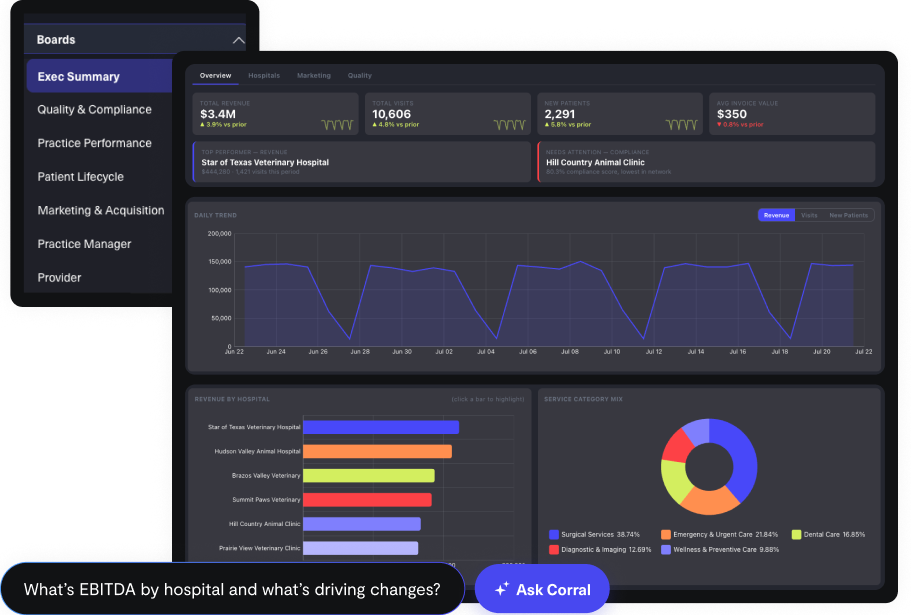
When someone at Olympus needs a number that is not yet on a dashboard, they can ask their data a question in plain English through AskCorral, CorralData's AI agent, and receive an answer with a supporting data visualization.

The finance and operations teams also build and modify dashboards themselves, from monthly operations boards to reactivation lists for front desk teams. In weekly sessions with CorralData, they work through prompts to develop what they need instead of submitting report requests and waiting for someone else to build them.

Results

Running the portfolio as one operating business

Olympus now has a portfolio-wide view of practices that previously reported separately. As of August 2026, patient opportunities from every original CRM instance flow through a standardized funnel, with lead sources across the portfolio visible in one attribution view. Leadership can compare lead-to-procedure conversion across practices using the same definitions, while the operational picture that once took a month to assemble now refreshes continuously.

That visibility has changed how the group manages conversion. Consult-to-surgery conversion is tracked monthly for every practice using consistent definitions. With stalls visible in the funnel, the team can identify where opportunities slow down and follow up while they are still in the pipeline. Cohort conversion improved steadily through 2026.

The infrastructure has also kept pace with the group's acquisitions. Olympus's public roster has grown from four practices to eight, with each new practice's CRM and EMR brought into the same warehouse and data models. New practices connect to the existing funnel, surgeon scorecard and forecast instead of requiring the reporting system to be rebuilt.

Frequently asked questions

CorralData connects EMR and POS systems, CRM and lead-tracking tools, ad platforms, accounting systems, payroll and HR systems, and inventory platforms, more than 600 data sources in total. Everything flows into one HIPAA-compliant data warehouse that refreshes automatically.

CorralData connects a newly acquired practice's own CRM, EMR, and all other systems into the same governed data model rather than requiring it to switch platforms first. Its data is mapped to the portfolio's established metric definitions, so it can be brought into consolidated reporting without rebuilding the reporting foundation from scratch.

There is no fixed list. If the data exists in a location's EMR, CRM, or accounting system, CorralData can track it, trend it, and help a team optimize for it. Common examples include OR utilization rate, lead-to-consult and consult-to-procedure conversion, customer acquisition cost, average procedure value, and revenue by procedure category. Any metric tied to a connected data source can be added.

AskCorral is CorralData's AI agent. Teams can ask business questions in plain English and AskCorral answers and provides recommendations based on their connected data. For example, someone might ask which practices are falling behind on lead-to-consult conversion this month, and AskCorral can flag where outreach would help most. Conversations with AskCorral reveal where a team needs to intervene, opportunities to capture, and actions to take. Beyond answering questions, AskCorral can build and modify dashboards and widgets, so teams never have to wait for someone to build new reports.

CorralData works with each customer to establish shared definitions for its core metrics, instead of recalculating them differently for every practice or report. Those definitions live in a governed Data Dictionary backed by verified datasets, so a number reviewed locally matches what's reviewed at the portfolio level. When a new practice joins, its data maps to those existing definitions rather than introducing a new version of every metric.

Keep reading

More customer stories

Case study

Inspire Aesthetics

4 min read

Case study

Annie Aesthetic

5 min read

Case study

Advanced MedAesthetic Partners

7 min read

Experience the power of actionable intelligence

Make your data work for you. Book a demo today to see CorralData in action.