






 " alt="">


















CorralData News / Feature Spotlight

CorralData
Use AI to effortlessly answer any business questions from all your data.
CorralData MCP brings your business data and intelligence directly into Claude and other AI assistants
Build and share custom data applications powered by your connected data.
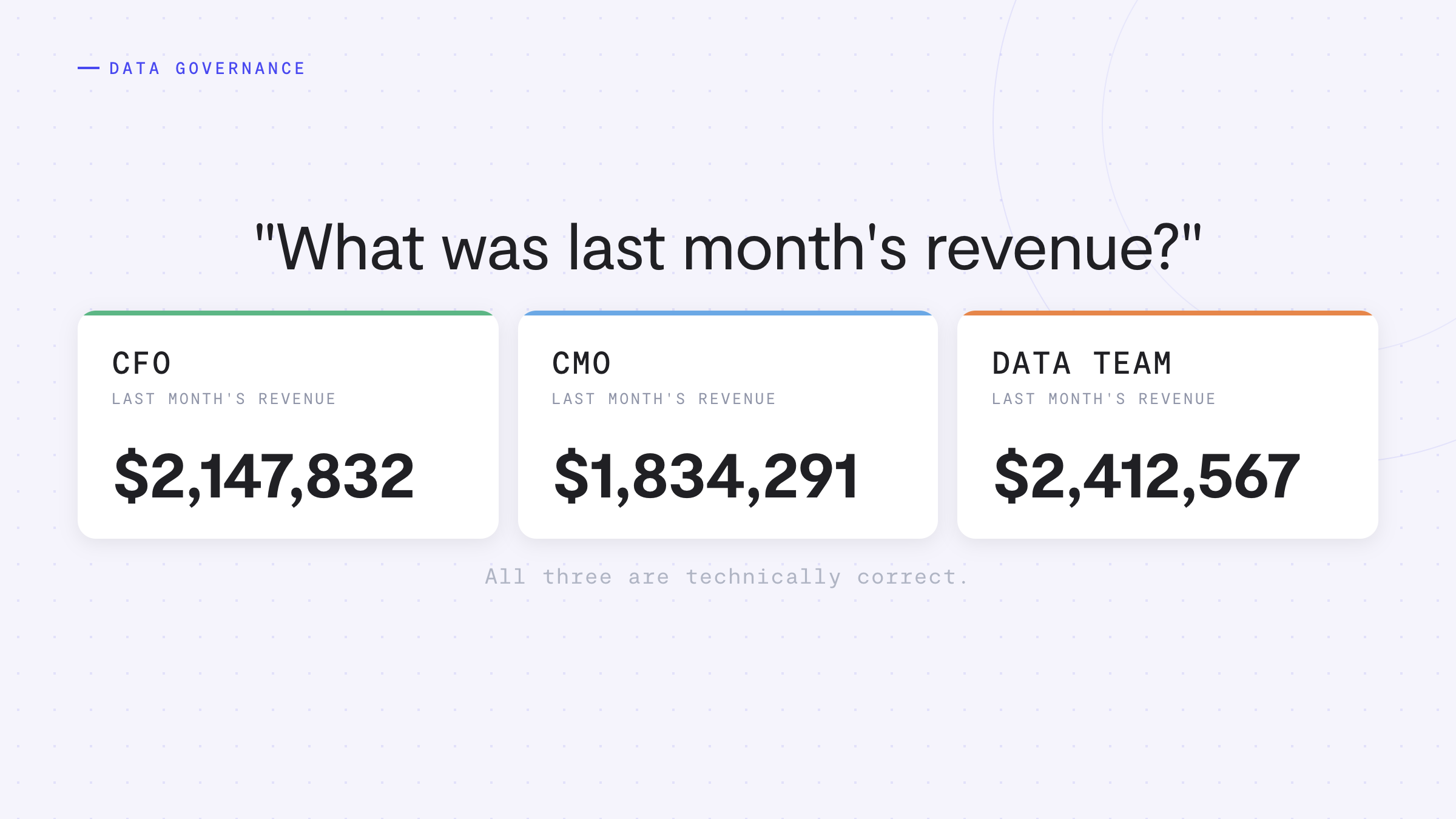
See where accuracy is won or lost across your data stack, and how a governed foundation changes the outcome.
Harness the power of AI without compromising on security.
A dedicated Technical Account Manager guides your team through it
Turn any dashboard into a clear, actionable summary in just one click
AI agents detect opportunities in your data and sync them across your platforms with our fully-managed Reverse ETL.
Sync data from 600+ sources, align KPIs, and see portfolio-wide results instantly.
Give every role the same board, filtered to exactly what they're allowed to see.
Help your clients become data driven faster through seamless reporting and collaboration tools.
Grow your census and strengthen your bottom line with HIPAA-compliant analytics.
AI-powered analytics for dental practices and DSOs. Track production, case acceptance, patient recare, and marketing ROI.
See medical, Mohs, and cosmetic performance across every clinic in one place.
Turn data into success with complete visibility of every consumer interaction.
Make data-driven decisions that enhance patient care and your bottom line.
HIPAA-compliant AI agents that optimize operations, marketing, and patient care across every med spa location.
See four-wall performance for every clinic and surgery center in one place.
AI-powered analytics for plastic surgery practices. Track consult conversion, surgeon performance, and marketing ROI.
AI agents that monitor, analyze, and optimize performance across every portfolio company.
Easily surface the data you need to increase sales and drive revenue.
Measure every hospital the same way and track compliance across your whole group.
See how AMP scaled profitability and enhanced patient care
See how CorralData & Evolve Results built ADVENT a true ROI engine
See how AMNH gained a better understanding of the ‘why’ behind their data
See how BodyLase unlocked full data visibility, enabling smarter marketing and stronger results
See how evolvetogether used AI-powered insights to shape a unified growth strategy
See how Geode Health unlocked the value of their data while protecting patient privacy
See how Engine identified and converted more high-value customers
See how AI and unified data drove revenue growth at Inspire Aesthetics
See how Lacoste boosted their e-commerce performance with AI-driven insights
See how Moon Juice used live insights to find, reach, and convert their best customers
See how Olympus uses data and AI to fuel growth
See how Options Medical Weight Loss maximized their LTV:CAC
See how Pfizer turned complex data into actionable marketing intelligence
See how Ready Set Rocket streamlined client reporting and unlocked actionable insights
See how Solo Stove measures true channel ROAS with a marketing mix model in CorralData
See how St. John Knits increased marketing efficiency by 50%
See how sweetgreen acquired new customers and built stronger relationships with their most loyal patrons

CorralData
For years, business intelligence ended at “insight”. Dashboards got prettier, queries ran faster, and self-serve tools became easier to use, but turning data analysis into action remained slow, manual, and dependent on too many handoffs.
Generative AI is changing that and ushering in a new age of “actionable intelligence”. That is, a closed-loop system that gets a trustworthy answer fast, and then acts on it, compressing what used to take months of analysis into minutes.
This transformation depends on mastering three capabilities: Accuracy, Access, and Activation. Together, they form The AAA Playbook: a framework for leaders who want to move their organizations from “knowing” to “doing”.
Speed means nothing without trust in the era of GenAI. Generating complex reports and running analysis in the blink of an eye is now table stakes. The new edge for businesses will be measured in accuracy, not agility.
Errors don’t just create messy dashboards, they drive bad decisions that are painful (and expensive) to unwind at scale. That’s why Alex Lirtsman, CEO of CorralData, puts accuracy first: “We’re asking a probabilistic model to give a deterministic answer,” he said. “That means accuracy has to be a discipline, not a feature. And built across all areas of the organization.”
Leading organizations are starting to build “accuracy assurance” into their AI and analytics pipelines: verifying every answer across multiple models and metadata configurations before anything reaches a business user. With CorralData, for example, AI-generated responses are automatically reviewed by another adversarial agent whose entire job is to judge the output and flag any responses for manual review, keeping accuracy above 94 percent. That’s the kind of bar you need when decisions impact budget, patient outcomes, or multimillion-dollar revenue lines.
The faster your AI moves, the tighter your verification loop has to be. A few ways to get started:
Get accuracy right and you build the credibility layer everything else depends on. Strategy, automation, and activation all sit on top of this foundation.
For years, “data democratization” mostly meant “more people can look at dashboards they don’t fully understand.” The access gap never really closed. Most teams still depended on a small group of analysts to translate data into decisions.
GenAI finally changes that dynamic. With natural-language interfaces, anyone can ask questions like: “What were my top revenue drivers this quarter?” or “Which campaigns are driving the highest LTV?” or “How does ad spend correlate with booked appointments in the last 30 days?”
Behind the scenes, AI unpacks those plain-language questions into the right queries, joins, and visualizations, and then explains the results back in clear, simple language.
“A question that used to take three days to answer can now be answered in three minutes,” said Lirtsman, “But speed is not the only benefit. It’s about letting people act on their curiosity with relevant information that can actually move the needle on their current operational challenges.”
Suddenly, a clinic manager, regional GM, or marketing coordinator can self-serve insights that used to sit behind a BI request queue. Of course, with that kind of power, you need smart guardrails. The goal isn’t for everyone to see everything, it’s intelligent access: anyone can ask, explore, and learn without compromising security or compliance.
Here’s a few ways leaders can shape this:
Done right, access stops being a bottleneck and becomes an engine for curiosity, experimentation, and smarter decisions at every level of the organization.
This is where the magic really happens.
Most BI still dies in a slide deck. Someone gets an insight, a decision is discussed in a meeting, and by the time anything actually changes in a platform or process, the moment has passed.
Activation is what happens when insight flows straight into action automatically, and with minimal friction. Modern GenAI systems make this possible. “The difference between knowing what happened and acting on what’s happening is only a few seconds now,” Lirtsman said. “That’s the real breakthrough and the advantage leaders need to seize.”
Imagine this in practice: AI spots a profitable audience that’s responding to a new offer and immediately pushes that segment into your ad platform, increasing budget against it without waiting for the next weekly review. At the same time, it flags an underperforming campaign with a high cost per booked appointment and automatically reduces spend or pauses it until someone takes a look. And when it detects a drop in conversion between consult and treatment in a specific region, it doesn’t just log the anomaly. It triggers a task for the operations team and surfaces the likely root causes so they can act right away.
Forward-thinking businesses are already wiring this together and connecting data from marketing, sales, operations, and patient or customer journeys so that insights move at the same pace as decisions.
To start building your activation muscle:
Accuracy and access set the stage, but activation is what turns potential energy into kinetic energy for your business.
The future of BI belongs to leaders who can close the gap between seeing and doing. When you apply the AAA Playbook, you create a self-reinforcing cycle:
Together, they form a self-reinforcing cycle that makes the enterprise faster, smarter, and more accountable.
For data and business leaders alike, the challenge will now be to keep in focus these three questions as GenAI continues to evolve at breakneck speed:
In the age of GenAI, the difference between good and great organizations isn’t how much data they analyze, it’s how fast they act on it. Agility, not analytics, will win the day and crown tomorrow’s leaders. So take your marks and get set. The race has already begun.
Wondering where to start? Click here to book a demo and we’ll show you how to map the AAA Playbook to your tools and workflows.
CorralData

CorralData


Make your data work for you. Book a demo today to see CorralData in action.

