



 " alt="">

















Data & AI Insights

Alex Lirtsman
Use AI to effortlessly answer any business questions from all your data.
CorralData MCP brings your business data and intelligence directly into Claude and other AI assistants
Build and share custom data applications powered by your connected data.
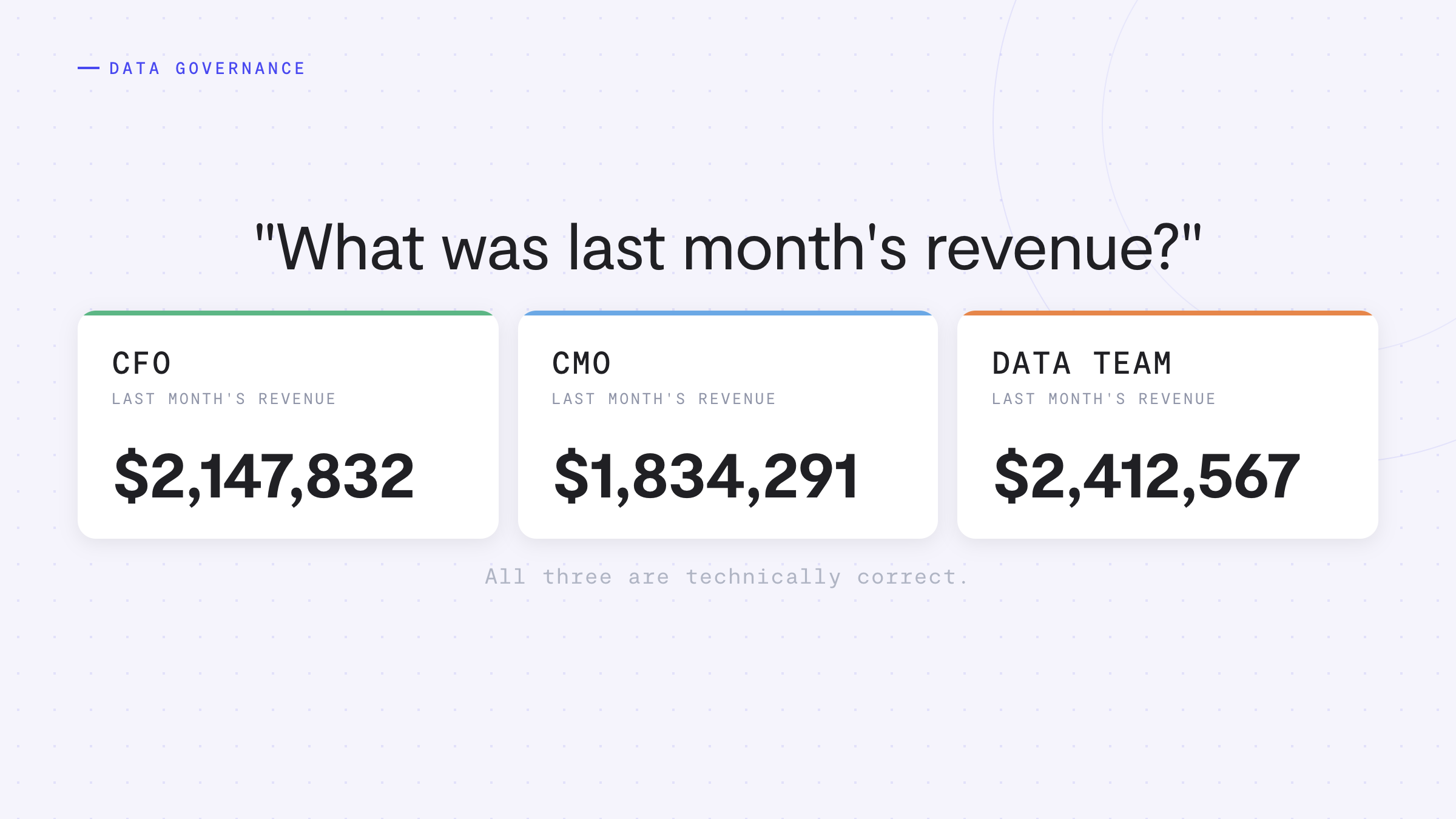
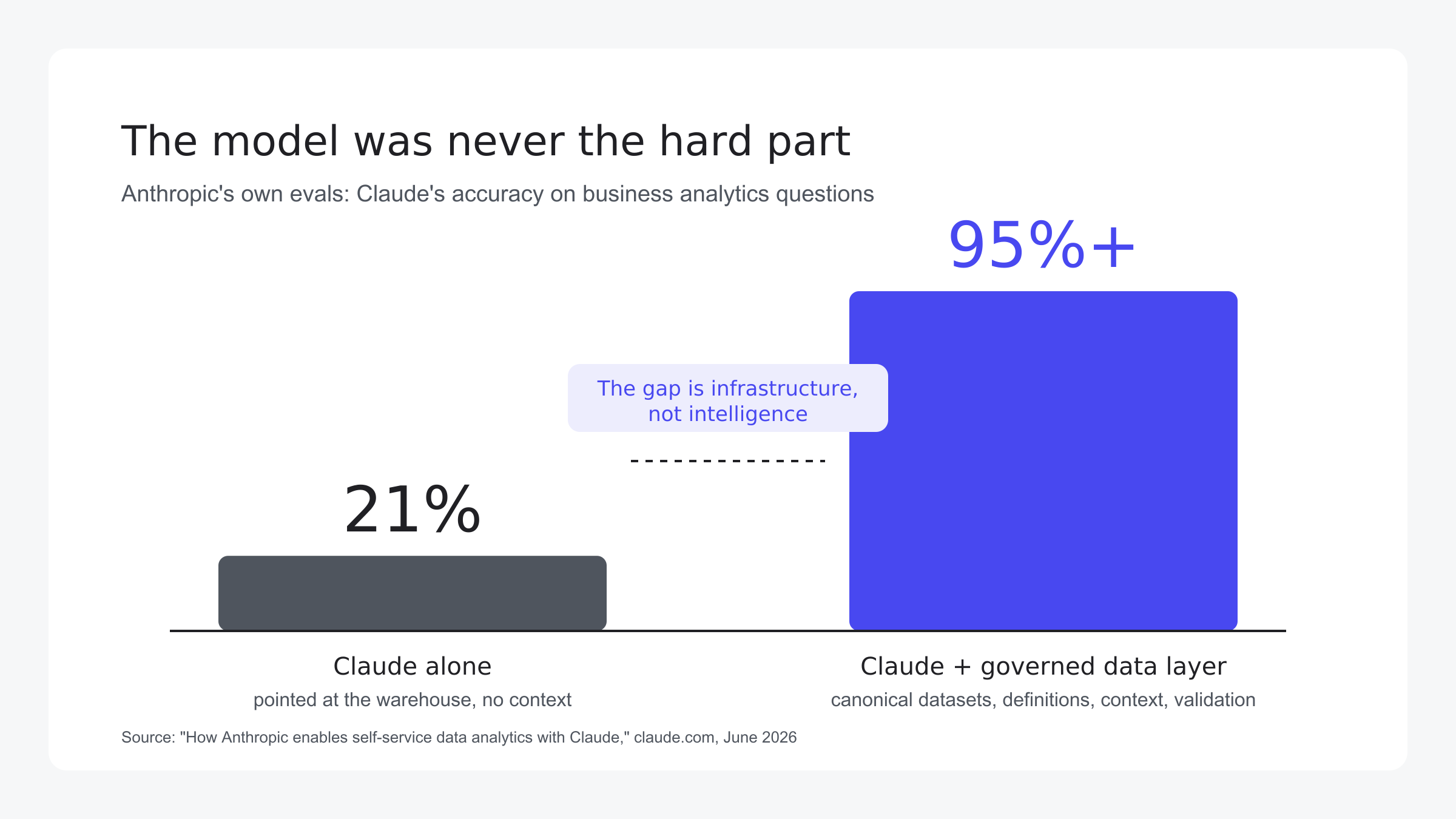
See where accuracy is won or lost across your data stack, and how a governed foundation changes the outcome.
Harness the power of AI without compromising on security.
A dedicated Technical Account Manager guides your team through it
Turn any dashboard into a clear, actionable summary in just one click
AI agents detect opportunities in your data and sync them across your platforms with our fully-managed Reverse ETL.
Sync data from 600+ sources, align KPIs, and see portfolio-wide results instantly.
Give every role the same board, filtered to exactly what they're allowed to see.
Help your clients become data driven faster through seamless reporting and collaboration tools.
Grow your census and strengthen your bottom line with HIPAA-compliant analytics.
AI-powered analytics for dental practices and DSOs. Track production, case acceptance, patient recare, and marketing ROI.
See medical, Mohs, and cosmetic performance across every clinic in one place.
Turn data into success with complete visibility of every consumer interaction.
Make data-driven decisions that enhance patient care and your bottom line.
HIPAA-compliant AI agents that optimize operations, marketing, and patient care across every med spa location.
See four-wall performance for every clinic and surgery center in one place.
AI-powered analytics for plastic surgery practices. Track consult conversion, surgeon performance, and marketing ROI.
AI agents that monitor, analyze, and optimize performance across every portfolio company.
Easily surface the data you need to increase sales and drive revenue.
Measure every hospital the same way and track compliance across your whole group.
See how AMP scaled profitability and enhanced patient care
See how CorralData & Evolve Results built ADVENT a true ROI engine
See how AMNH gained a better understanding of the ‘why’ behind their data
See how BodyLase unlocked full data visibility, enabling smarter marketing and stronger results
See how evolvetogether used AI-powered insights to shape a unified growth strategy
See how Geode Health unlocked the value of their data while protecting patient privacy
See how Engine identified and converted more high-value customers
See how AI and unified data drove revenue growth at Inspire Aesthetics
See how Lacoste boosted their e-commerce performance with AI-driven insights
See how Moon Juice used live insights to find, reach, and convert their best customers
See how Olympus uses data and AI to fuel growth
See how Options Medical Weight Loss maximized their LTV:CAC
See how Pfizer turned complex data into actionable marketing intelligence
See how Ready Set Rocket streamlined client reporting and unlocked actionable insights
See how Solo Stove measures true channel ROAS with a marketing mix model in CorralData
See how St. John Knits increased marketing efficiency by 50%
See how sweetgreen acquired new customers and built stronger relationships with their most loyal patrons


CorralData | In partnership with Disruptive Digital
There’s a problem hiding inside almost every Meta campaign run by a multi-location service business, and it has nothing to do with your creative, your budget, or your agency.
It has to do with what happens after someone clicks.
Meta’s ad platform is not a static media buy. It’s a learning machine. Every conversion signal you send back — every form fill, every booked appointment, every completed transaction — teaches the algorithm something about who your best customers are. The more signals, the smarter the machine, the better the campaign performs over time.
Here’s the problem: for most businesses, the feedback loop stops at the click. Meta records a lead. Everything that happens after — whether that person showed up, bought something, came back, and became a genuinely high-value customer — lives in your CRM or practice management system. And in most cases, none of that ever makes it back to Meta.
So Meta keeps optimizing for form-fillers. And you keep wondering why you’re not getting high lifetime value customers. This isn’t a campaign optimization problem. It’s a customer data problem. And it’s one most marketing teams can solve without realizing how close they already are to the answer.
The customer journey for a multi-location service business involves many touchpoints: a customer sees a Meta ad, searches for reviews on Google, calls the business to ask a question, book an appointment on the website, show up to the location, pay, and return multiple times over the following year. At every touchpoint, a different system captures a fragment of the story.
Meta sees the impression and the form fill. The CRM holds the booking and the customer record. The POS holds the transaction. None of these systems talk to each other by default, and in most businesses, nobody has connected them.
The result is a signal that stops at “became a lead.” Meta never learns who actually converted. Never learns who came back three times. Never learns who referred two friends. It is optimizing on a fraction of the funnel and calling it performance. And if it never learns who your best customers are, it will never learn how to find more of them.
This is why campaigns plateau. The algorithm has hit the ceiling of what it can learn from the signals you’re giving it. It isn’t going to get meaningfully smarter until you give it something better to learn from.
Closing the gap requires two things working together, and most businesses are only solving one of them.
Both problems are solvable. They just require different work.
There are two primary methods to sync data to Meta, and they depend on how your campaigns are structured.
Both approaches share the same underlying logic: the more downstream and revenue-correlated your signals are, the smarter the algorithm gets about who to find. In one Disruptive Digital client engagement, implementing a full-funnel CAPI solution drove a 92% improvement in return on ad spend year-over-year, a 53% decrease in cost per lead, and a 55% improvement in lead conversion rate. One structural change to how data flows back to the platform. That’s the ceiling difference between a loop that closes and one that doesn’t.
Campaign structure matters too. According to Meta’s own platform data, broad ad sets with strong downstream signals consistently outperform fragmented interest-based targeting by around 16% on cost per acquisition. Meta’s machine learning needs data volume to find patterns. Splitting budget across dozens of narrow audience segments starves each campaign of the signal it needs to improve — and no amount of creative testing will compensate for an algorithm that’s working with incomplete information.
Once the signal is flowing and the structure is consolidated, CRM data unlocks a third layer of targeting leverage. Disruptive Digital uses three approaches depending on where a business is in its data maturity: broad targeting, where Meta finds customers most likely to convert based on the conversion event you’re optimizing for; lookalike audiences built from your highest-value customers, targeting people who share the profile of your best existing relationships; and lookalike exclusions built from your lowest-value converters, actively steering the algorithm away from profiles that consistently underperform on retention. The right approach depends on signal quality — which is exactly why the data work has to come first.
Here’s where most businesses stop short. They understand the mechanics of sending better signals to Meta. What they haven’t solved is the upstream question: what signals are you actually sending?
If your CRM only records that someone filled out a form, that’s all Meta learns. To teach the algorithm to find high-value customers, not just leads, you first need to know which leads became customers, which customers are high-value, and what made them that way. That intelligence doesn’t live in your ad account. It lives in your business.
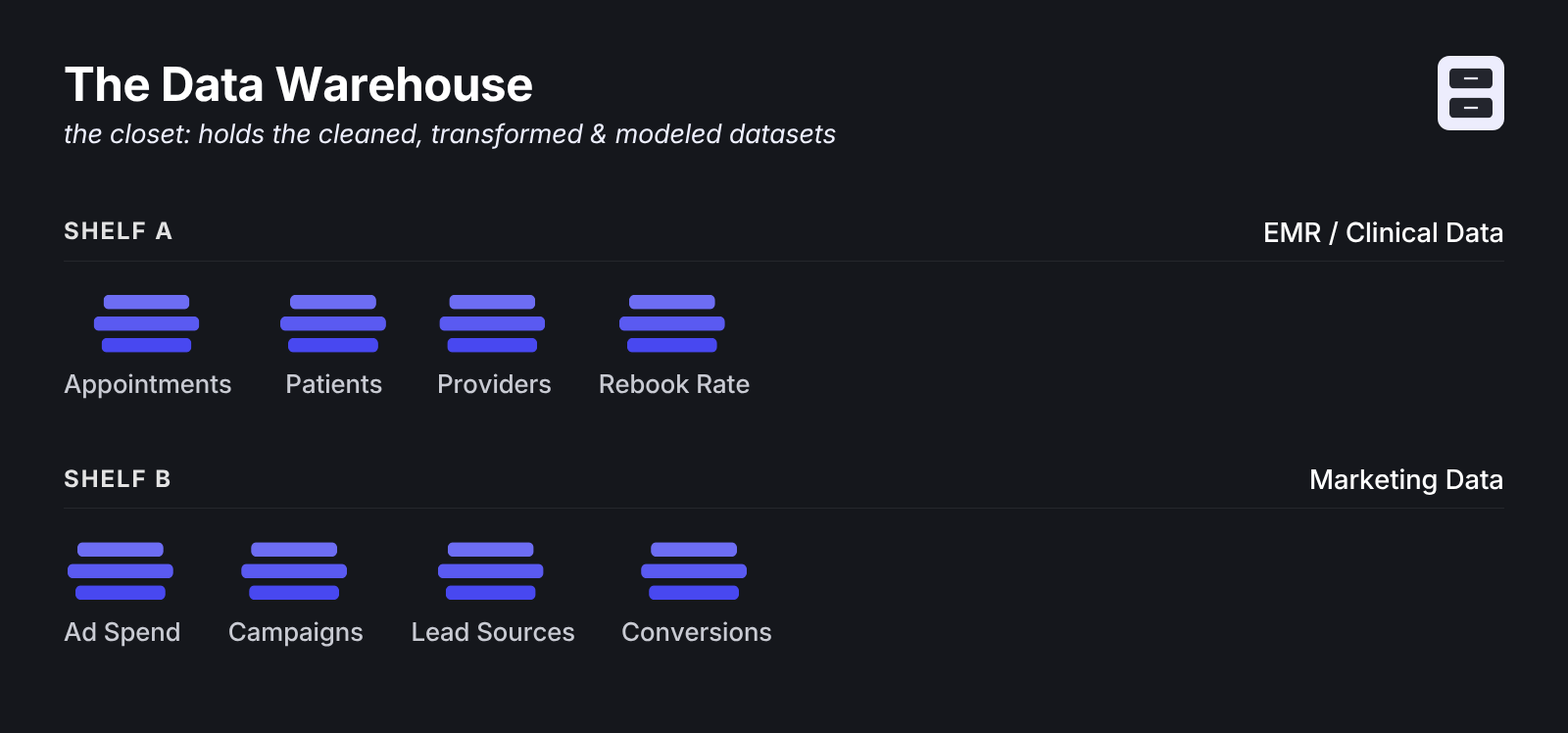
This is where CorralData’s work begins. Most businesses don’t have a data collection problem. They have an intelligence problem. The information needed to understand customer value already exists across their CRM, operational systems, financial platforms, and marketing channels — CorralData unifies those systems into a single operating view of the customer journey, connecting marketing performance to appointments, transactions, retention, and revenue.
Once that intelligence exists, the real work becomes possible. Not all leads are equal, and the differences between them are almost never visible in the ad account alone. Which campaigns are producing your highest-LTV customers — not just your lowest-CPL leads? A campaign with a $50 cost per lead and a $5,000 customer lifetime value matters more than a campaign with a $20 CPL and a $500 LTV every time, and CPL alone will never tell you that. Which acquisition channels produce structurally higher-value customers? Which customer profiles consistently churn?
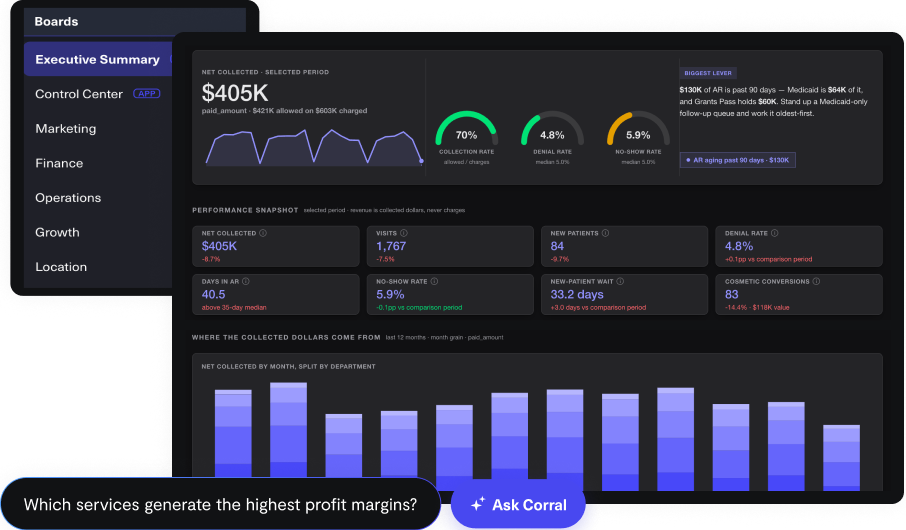
This intelligence doesn’t stay trapped in a dashboard. It can be pushed back into the systems where decisions happen, like Meta, CRMs, and email — informing marketing audiences, campaign optimization, operational workflows, and executive planning. The goal isn’t simply to connect data. It’s to help teams identify what matters, act on it, and continuously improve performance across the business. That means using CorralData’s AI agent, AskCorral, to monitor thousands of signals across marketing, operations, and finance, surfacing the opportunities and risks that deserve attention before they show up in next month’s reports.
Neither piece works as well without the other.
For marketing leaders at multi-location businesses, this is ultimately a financial argument. The CMOs who protect their budgets aren’t the ones who can show the lowest CPL. They’re the ones who can demonstrate marketing’s direct contribution to revenue — by channel, by campaign, by customer cohort.
LTV:CAC by channel is the conversation that actually matters to anyone making budget decisions. When you can walk in and say “our Meta spend produces customers with twice the lifetime value of our paid search spend, so we’re reallocating accordingly” — that’s data-driven intelligence, not defense.
Most marketing teams are defending their spend. The ones with closed-loop data are putting it to work.
The businesses that win aren’t necessarily the ones spending the most on advertising. They’re the ones who have customer intelligence and data to make their campaign algorithms smarter.
Want to see what your customer LTV data actually looks like by campaign, channel, and acquisition source? Book a CorralData demo.
Want a free audit of your Meta signal quality and ad account structure? Get your Disruptive Digital audit.
Alex Lirtsman

CorralData


Make your data work for you. Book a demo today to see CorralData in action.