



 " alt="">

















Data & AI Insights

CorralData
Use AI to effortlessly answer any business questions from all your data.
CorralData MCP brings your business data and intelligence directly into Claude and other AI assistants
Build and share custom data applications powered by your connected data.
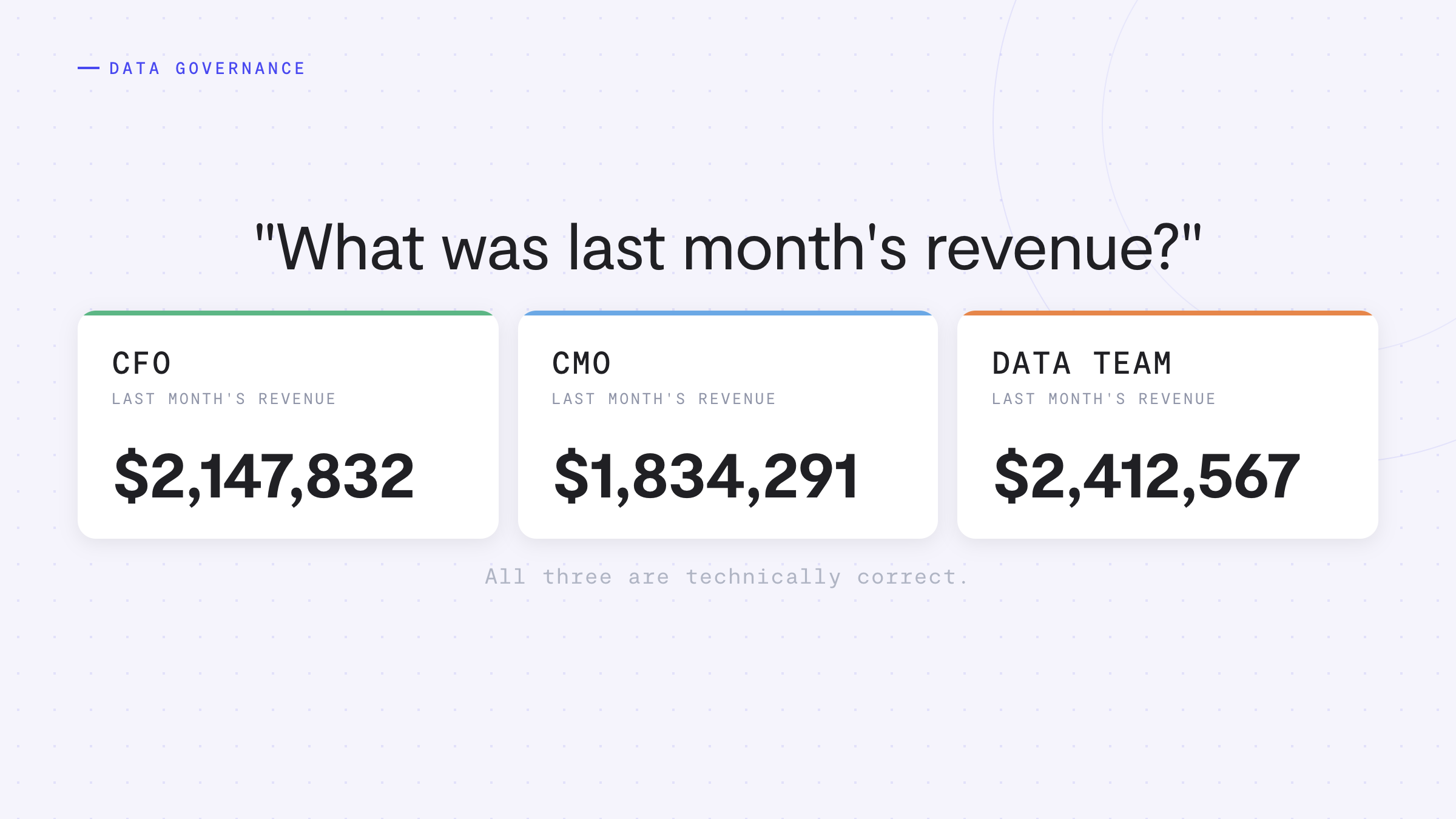
See where accuracy is won or lost across your data stack, and how a governed foundation changes the outcome.
Harness the power of AI without compromising on security.
A dedicated Technical Account Manager guides your team through it
Turn any dashboard into a clear, actionable summary in just one click
AI agents detect opportunities in your data and sync them across your platforms with our fully-managed Reverse ETL.
Sync data from 600+ sources, align KPIs, and see portfolio-wide results instantly.
Give every role the same board, filtered to exactly what they're allowed to see.
Help your clients become data driven faster through seamless reporting and collaboration tools.
Grow your census and strengthen your bottom line with HIPAA-compliant analytics.
AI-powered analytics for dental practices and DSOs. Track production, case acceptance, patient recare, and marketing ROI.
See medical, Mohs, and cosmetic performance across every clinic in one place.
Turn data into success with complete visibility of every consumer interaction.
Make data-driven decisions that enhance patient care and your bottom line.
HIPAA-compliant AI agents that optimize operations, marketing, and patient care across every med spa location.
See four-wall performance for every clinic and surgery center in one place.
AI-powered analytics for plastic surgery practices. Track consult conversion, surgeon performance, and marketing ROI.
AI agents that monitor, analyze, and optimize performance across every portfolio company.
Easily surface the data you need to increase sales and drive revenue.
Measure every hospital the same way and track compliance across your whole group.
See how AMP scaled profitability and enhanced patient care
See how CorralData & Evolve Results built ADVENT a true ROI engine
See how AMNH gained a better understanding of the ‘why’ behind their data
See how BodyLase unlocked full data visibility, enabling smarter marketing and stronger results
See how evolvetogether used AI-powered insights to shape a unified growth strategy
See how Geode Health unlocked the value of their data while protecting patient privacy
See how Engine identified and converted more high-value customers
See how AI and unified data drove revenue growth at Inspire Aesthetics
See how Lacoste boosted their e-commerce performance with AI-driven insights
See how Moon Juice used live insights to find, reach, and convert their best customers
See how Olympus uses data and AI to fuel growth
See how Options Medical Weight Loss maximized their LTV:CAC
See how Pfizer turned complex data into actionable marketing intelligence
See how Ready Set Rocket streamlined client reporting and unlocked actionable insights
See how Solo Stove measures true channel ROAS with a marketing mix model in CorralData
See how St. John Knits increased marketing efficiency by 50%
See how sweetgreen acquired new customers and built stronger relationships with their most loyal patrons

CorralData
Cosmetic surgery has a more complex operational footprint than almost any other aesthetic specialty. A single patient journey — from first inquiry to booked procedure — touches a paid media platform, a call tracking tool, a CRM, an OR scheduling system, an EMR, and a financing provider before it ever shows up as revenue. Each of those stages captures data. Most of that data never gets used.
The practices pulling ahead aren’t running more tools. They’re running the right tools at each stage — platforms purpose-fit for the way cosmetic surgery actually works, not retrofitted from adjacent specialties or inherited from whatever an agency implemented three years ago. For PE-backed groups, that’s also a portfolio-level decision: every acquired location brings its own patchwork of systems, and standardizing around the right platforms is the infrastructure call that makes everything else easier to execute.
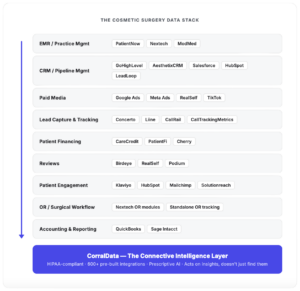
Working with leading cosmetic surgery practices across the country, we’ve mapped the full integration landscape the space relies on — every workflow category, the most-used platforms in each category, and where they fit in the patient journey.
The EMR is the system of record for patient clinical data — consult outcomes, procedure history, provider assignments, treatment plans, and before/after documentation. In cosmetic surgery more than most specialties, the clinical record and the commercial relationship are deeply intertwined: a patient’s procedure history, consultation notes, and photo documentation are both clinical assets and business intelligence. It’s also typically where core practice management functions like scheduling and billing live.
Platforms: PatientNow · Nextech · ModMed
The CRM manages the patient pipeline from first inquiry through consult and booking. Cosmetic surgery has a longer consideration cycle than most aesthetic specialties — patients research extensively, attend consults, and may take weeks or months before booking. The CRM is where that journey is tracked, nurtured, and managed.
Platforms: GoHighLevel · AesthetixCRM · LeadLoop · Salesforce · HubSpot
Paid media covers the channels cosmetic surgery practices use to reach and attract prospective patients — across search, social, and specialty platforms. Because cosmetic surgery is elective and cash-pay, patients behave more like consumers than healthcare patients. They research extensively, compare surgeons, and make decisions based on reputation and results as much as clinical need.
That makes channel intent and attribution more consequential here than in almost any other healthcare vertical, and the mix of channels and budget allocation varies meaningfully by practice size, procedure focus, and patient demographic.
Platforms: Google Ads · Meta Ads · RealSelf · TikTok
This stage covers how incoming patient contacts are captured and attributed across chats, calls, and forms. Cosmetic surgery leads rarely convert on the first touch — a patient might chat in one day, call back a week later, and submit a consult request after seeing a before/after result. Capturing and connecting those touchpoints into a single lead record is what makes attribution accurate, and cosmetic surgery’s meaningful volume of inbound phone traffic makes call tracking a particularly important part of this stage.
Platforms: Concerto · CallRail · CallTrackingMetrics · Liine
Patient financing enables practices to offer payment plan options for elective procedures. With average procedure values in the thousands and no insurance coverage, financing directly impacts conversion. The decision to book often hinges on whether a patient can structure payment in a way that works for them, making financing an active part of the sales workflow. Financing platforms integrate into the consultation and booking process, allowing patients to apply and get approved during or after their consult.
Platforms: CareCredit · PatientFi · Cherry
Unlike most healthcare verticals where patients choose a practice, cosmetic surgery patients choose a surgeon. Reputation management here operates at the individual provider level — a practice’s aggregate rating matters less than whether a specific surgeon’s profile, review volume, and before/after content are strong enough to drive consult requests. Platforms in this category help practices manage, solicit, and consolidate reviews across multiple channels, surgeons, and locations.
Platforms: Birdeye · RealSelf · Podium
Patient engagement covers the tools practices use to communicate with patients after the consult — from appointment confirmations and follow-up through re-engagement of patients who haven’t yet booked. The consult-to-booking gap is wider in cosmetic surgery than almost any other specialty. Patients who attended a consult, received a quote, and went quiet represent a distinct and recoverable segment that most practices have no systematic way to identify or prioritize. Given the longer consideration cycle, this stage is critical for staying connected with patients who are still deciding.
Platforms: Klaviyo · HubSpot · Mailchimp · Solutionreach
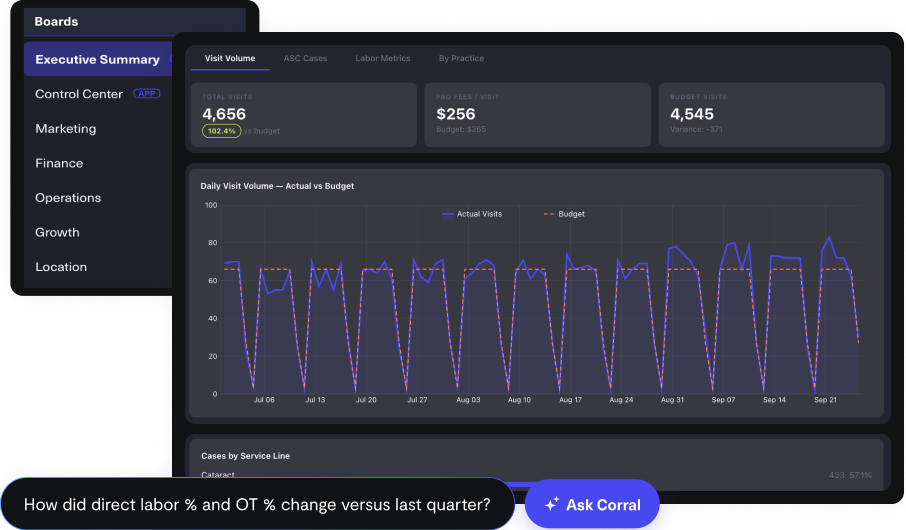
OR and surgical workflow tools manage operating room scheduling, case management, and surgical coordination. Unlike volume-based specialties where throughput is the primary driver, cosmetic surgery practices depend heavily on OR efficiency. A surgeon with strong case acceptance but underutilized block time represents a direct, calculable revenue gap. For multi-location and PE-backed groups, OR utilization is one of the clearest performance metrics available, and this stage connects clinical scheduling directly to financial performance.
Platforms: Nextech OR modules · Standalone OR tracking
Accounting and reporting covers the financial infrastructure of the practice — how revenue is tracked, costs are allocated, and performance is measured across locations. Because cosmetic surgery is almost entirely cash-pay, there are no insurance reimbursement variables to obscure performance. Margin is a direct function of procedure mix, cost structure, and volume. That makes financial data particularly actionable and location-level comparisons particularly revealing, especially for multi-location and PE-backed groups where this stage supports the financial reporting required for portfolio management and exit preparation.
Platforms: QuickBooks · Sage Intacct
Note: this article focuses on elective and cosmetic surgery, which is primarily cash-pay. Practices with a meaningful reconstructive or insurance-based caseload will have an additional stage here — typically Trizetto for claims processing.
Every layer in the stack matters. Each one captures a piece of the operational picture. Getting them right is not optional. But here’s what the right tools don’t solve: every vendor owns their slice and has no structural incentive to connect to the others.
PatientNow doesn’t talk to CallRail by default. GoHighLevel doesn’t know what happened in the OR. CareCredit doesn’t know which lead source the patient came from. Each platform is optimized to be excellent at its own function — not to hand its data off cleanly to the next system in the chain. That’s not a flaw in the tools. It’s just how the market is built.
The consequence is that the data lives in the right places and goes nowhere. Nobody owns the full picture — and in most practices, nobody has the mandate or the tooling to build it. Attribution gets estimated. Margin gets reconstructed from a month-end report. The COO sees a location’s consult conversion rate in the board deck rather than three weeks before it, when there was still time to do something about it.
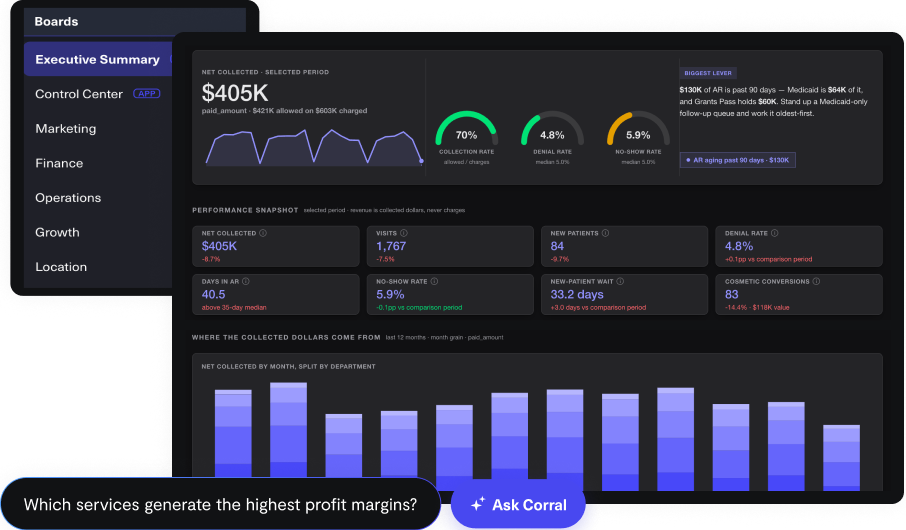
That’s what CorralData is built to solve. It’s a HIPAA-compliant intelligence platform pre-integrated with every system in this stack, with a data model purpose-built for healthcare operations and an AI layer trained on the metrics that actually drive performance in this space. It doesn’t just surface what’s happening. It tells you what to do about it.
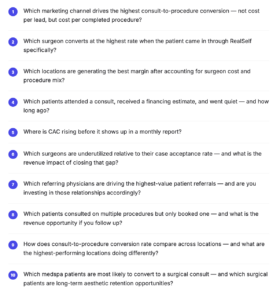
Discover what becomes visible when everything is connected. CorralData is pre-built for every integration in this piece — live in weeks, not quarters, with no engineering required. Book a demo today.

Alex Lirtsman


Make your data work for you. Book a demo today to see CorralData in action.