



 " alt="">

















Agentic analytics is the latest AI buzzword being thrown around. So what is it even?
Agentic analytics is a system where AI analyzes and reports on data like a human data analyst would. It plans and runs a multi-step analysis on its own: it decides what to check, runs several queries to compute, inspects its own interim results, and adjusts before handing back an answer.
In the real world, we can all agree that a senior data analyst is better than a junior data analyst. The senior analyst's work should be more accurate, produced faster, with rationale and insights that make sense, and recommendations for what to do based on the insights that improve business outcomes. AI can be fast, but it won't perform like a senior analyst right out of the box.
Ask an AI assistant connected to your data a business question, like “how is rebooking trending?” and you'll get an answer immediately. Ask the same question a different way next time, like “what's our rebooking rate looking like this month?”, and you might get a different number. The data hasn't changed, what's happening is the AI is guessing. That's what AI does when there aren't data structures and strict guardrails for how it should use and interpret the data it's connected to.
It's not the AI model, it's the data underneath it
Point a capable AI assistant, Claude, ChatGPT, doesn't matter which, at a raw database, and it still has to guess: which tables to combine, how a metric like “rebooking rate” or “active membership” should be calculated, whether last month's numbers need to be normalized for seasonality before comparing them to this month's. It'll often guess right, which is exactly the problem. It looks right until the one time it isn't, and there's no way to tell which time that was just by reading the answer.
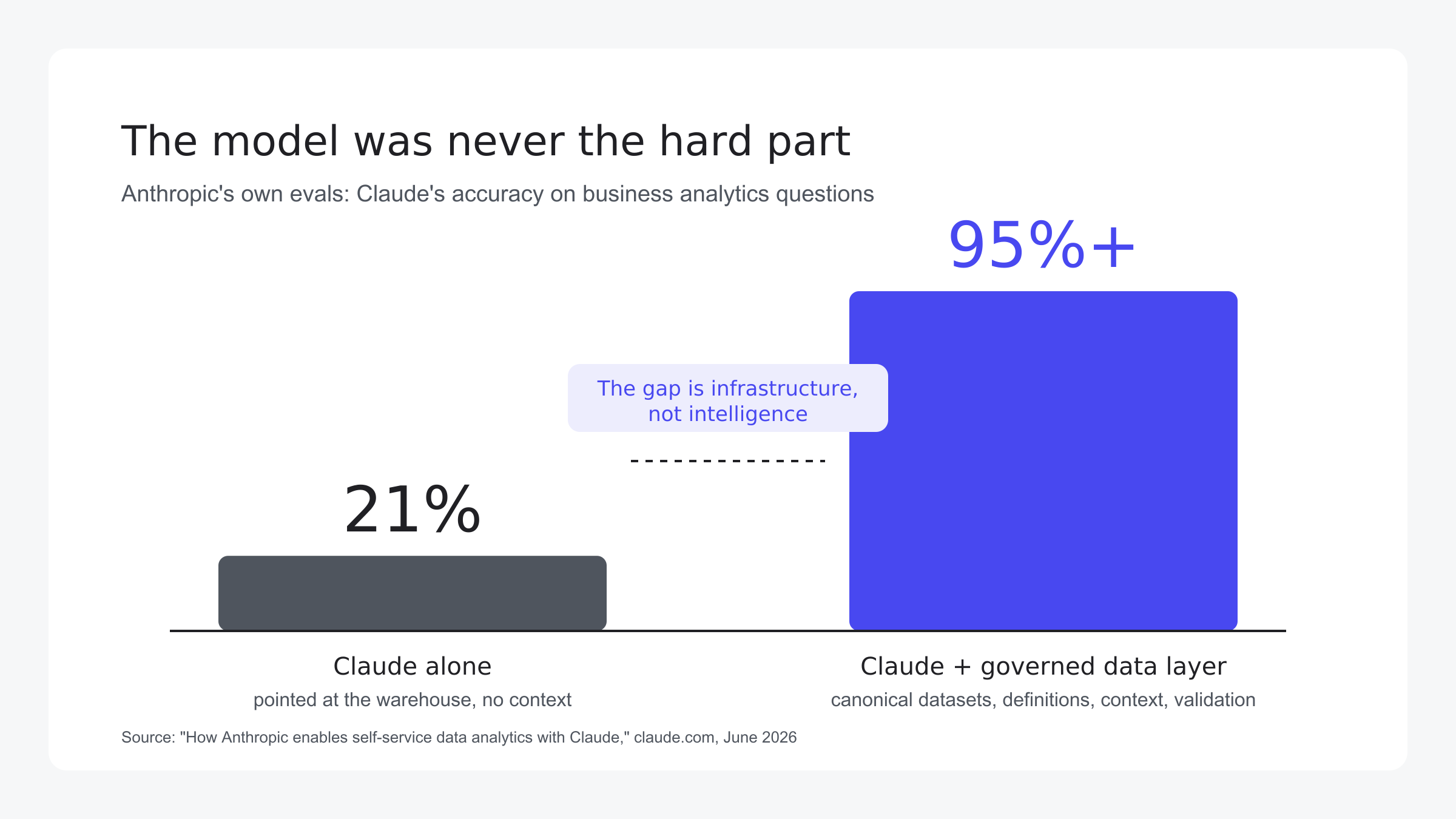
That's not a sign the AI model is weak. Anthropic ran into the same issue building its own internal analytics on Claude: even their most advanced model couldn't generate reliable answers on its own. The gap closed only when they stopped relying solely on model capability and built a structured data infrastructure underneath it. A raw database doesn't give a model that foundation. Think of it like handing someone a filing cabinet with no labels on the drawers (that's the structure problem, how the tables and fields actually connect to each other) and no instructions for what any of it means (that's the context problem, what a term like “active membership” actually stands for, what counts as normal versus something worth flagging).
Right now, at most organizations, that context lives in a person's head, not in the database. Ask them why a number moved and they can tell you; ask the AI, and it has nothing to reason against in the raw data tables.
This is where AI actually needs something different from what a human data team has traditionally relied on.
A human analyst builds up business knowledge over time and develops an instinct for when a number looks wrong, that gets flagged for a second look before it reaches anyone. An AI agent doesn't have that instinct. This is the same senior-versus-junior-analyst gap from the top of this piece. For a person, that gap closes with time on the job. For AI, it closes when the context around the business is built into the data itself with specific instructions and definitions.
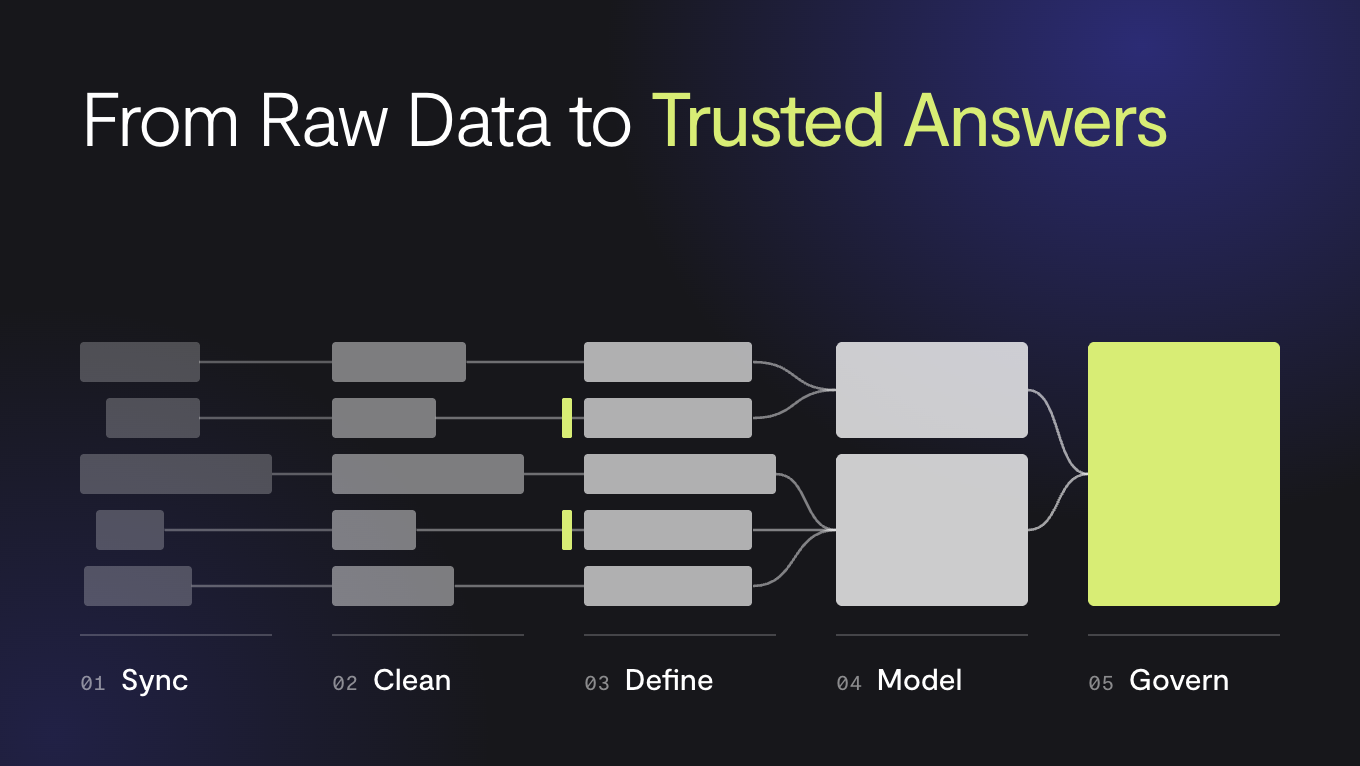
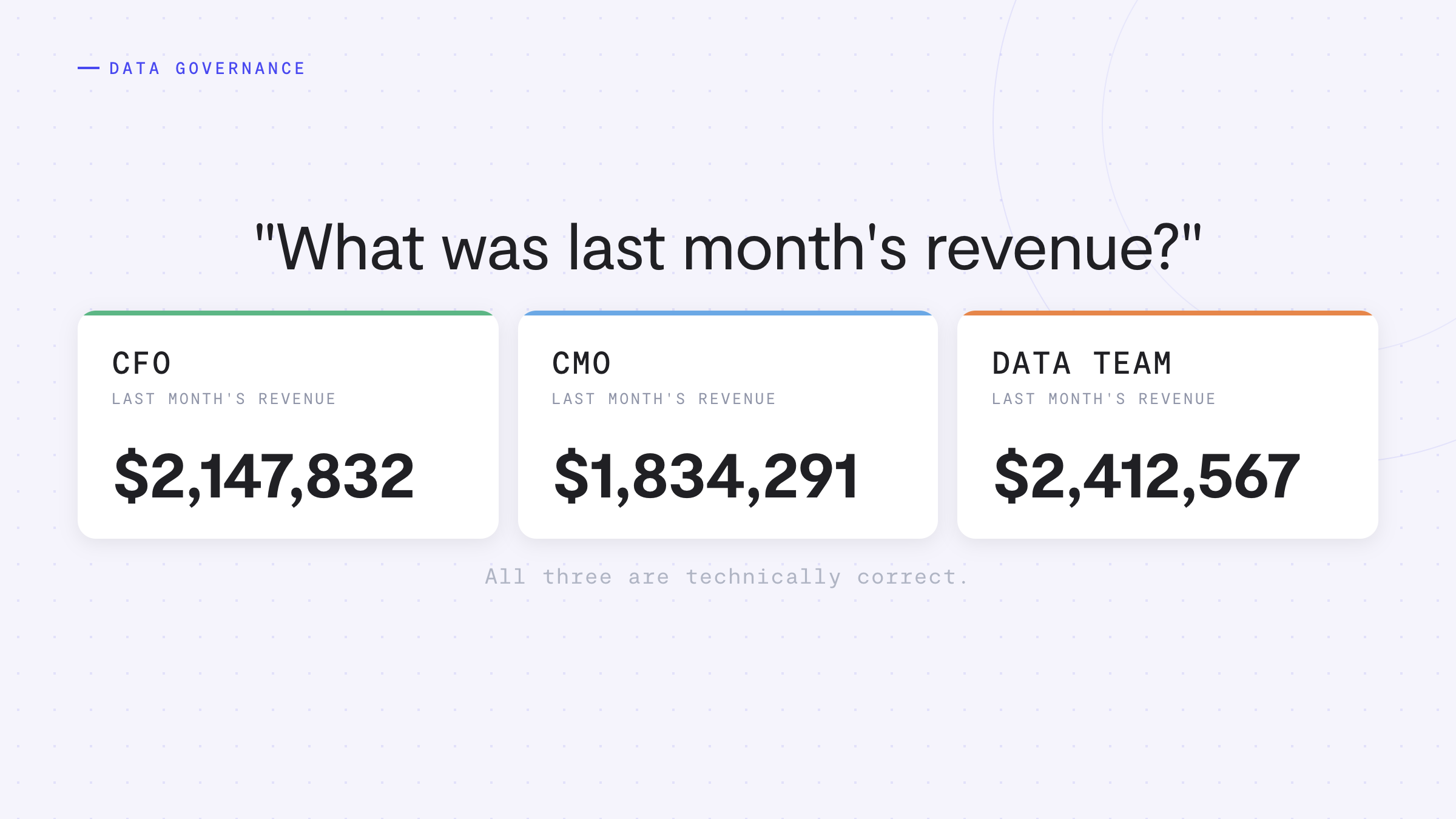
AI will report a wrong number with the same confidence as a right one, because it can't really tell the difference. So the methodology and definitions that used to live in an analyst's head have to move somewhere the AI can actually reason against. Agentic analytics isn't just a smarter model, it's a connected system. It requires a semantic layer, machine-readable definitions and instructions, instead of tribal knowledge. Skip that step and you get a probabilistic system: the same question can produce a different answer depending on who asked it, or which AI answered it, regardless of how capable that AI is. If you want to understand in more detail, read our article on data governance.
What does agentic analytics look like in practice?
When the right data foundation and context are in place, AI can be leveraged to the full extent for analytics. Here's what that actually looks like:
- Ask which channel is actually worth the money. Not which one generates the most leads, but which one brings in patients who rebook and stick around for a year. Answering that means joining ad spend data to booking and membership data that normally live in systems that never talk to each other, exactly the kind of join an AI without a governed foundation would get wrong.
- Ask where you're leaving money on the table. No-shows that never got rebooked, memberships about to lapse with no outreach, leads that went cold. A missed opportunity and an unexplained number are close cousins, “why did this happen” and “what did we miss” come from the same instinct, and a governed foundation lets AI answer both: walking back through the actual calculation behind a number that looks wrong, not just flagging that something changed.
- Ask what happens if you change something (scenario planning). Ask what happens to bookings if you shift $2,000 a month from search ads into social and AI reasons against a forecast based on your own history, trend and seasonality worked out, backtested against what actually happened, so it can tell you not just a number but how much to trust it.
- Bring AI into how you already work, not just into a dashboard. When AI assistants like Claude or ChatGPT are connected to governed data and other tools, you can have AI:
- Create a weekly report for you and sent in Slack before Monday's meeting, or have it write the team recap itself, grounded in real numbers instead of a blank page.
- Scan your dashboard each morning and surface only what actually moved enough to matter, checking first for an obvious explanation (a new campaign, a site outage) so you're not chasing dead ends every time a number wiggles.
- Alert you where you work instead of configuring a threshold rule: “tell me in Slack if rebooking drops more than 10% week over week at any location.”
- Compare performance against your actual targets, not just last month: “we're 12% behind pace on this quarter's goal, and if this trend holds, we'll miss it by X.”
- Catch something broken, like a data source that stopped syncing, and write a ticket for you with the context already filled in, what's wrong, since when, what's affected, ready for someone to review and file.
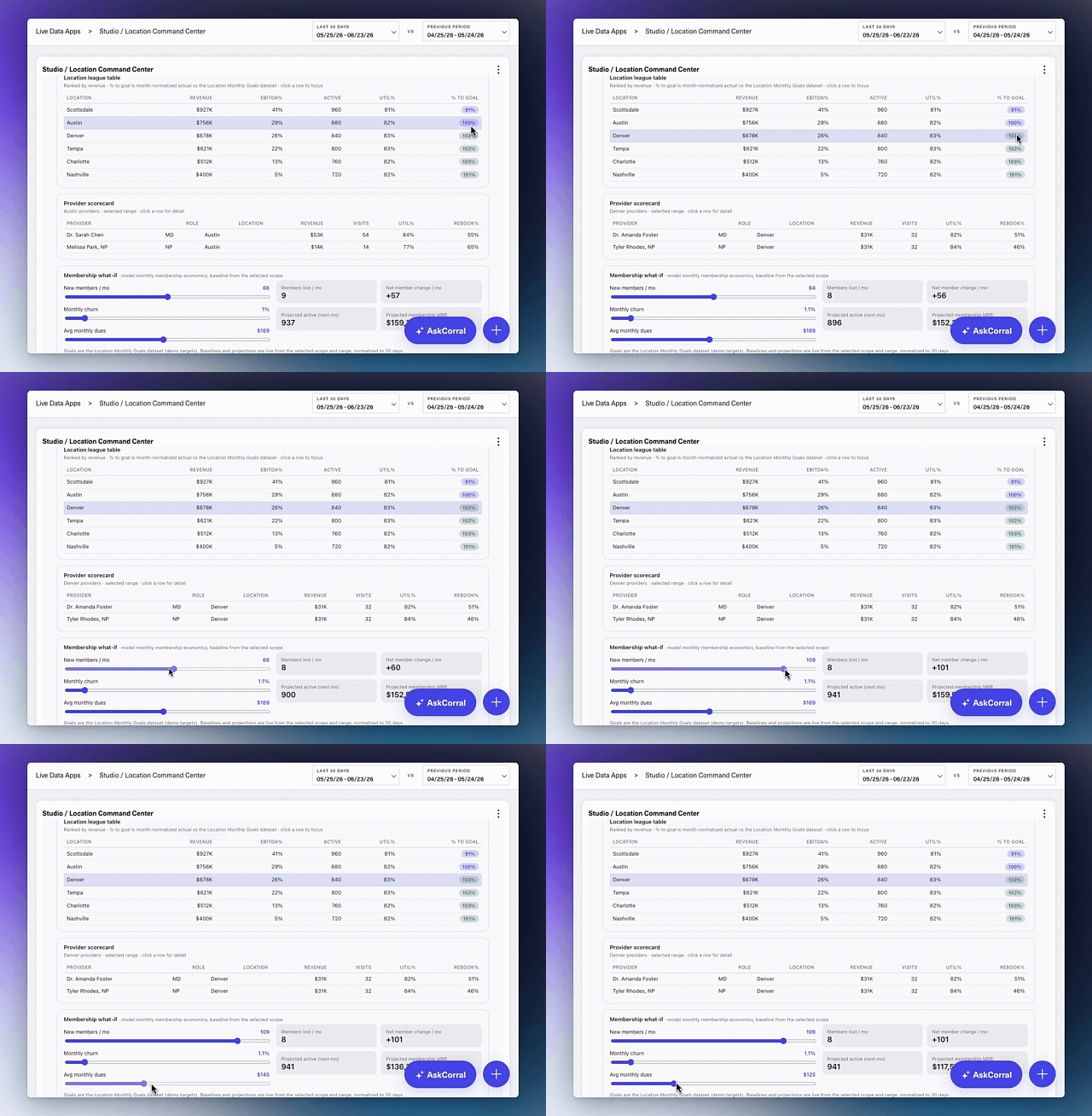
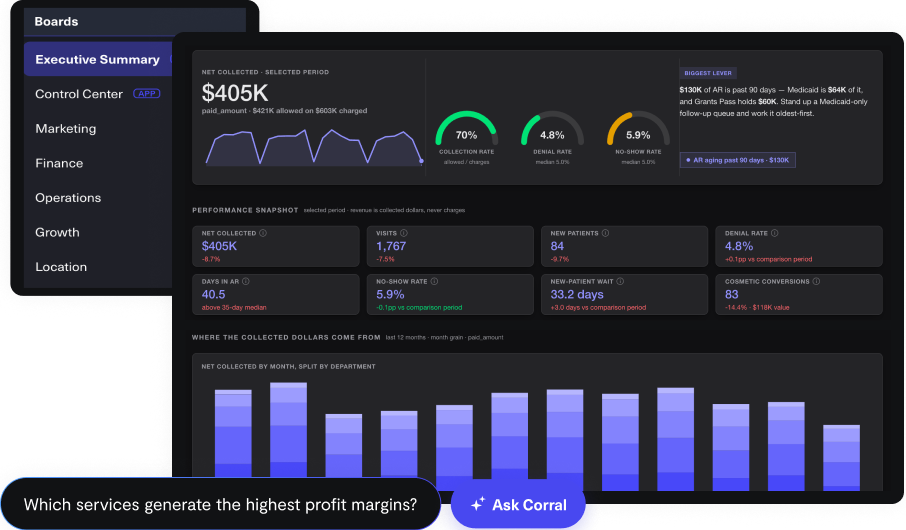
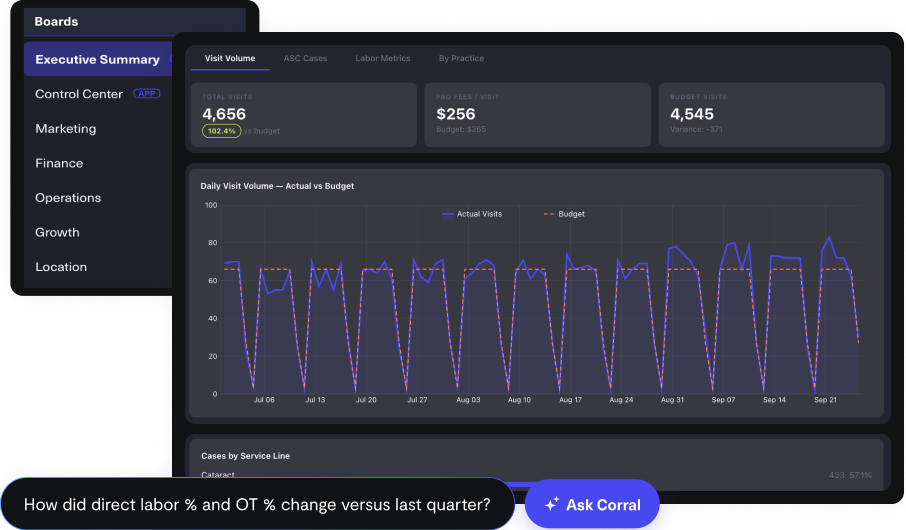
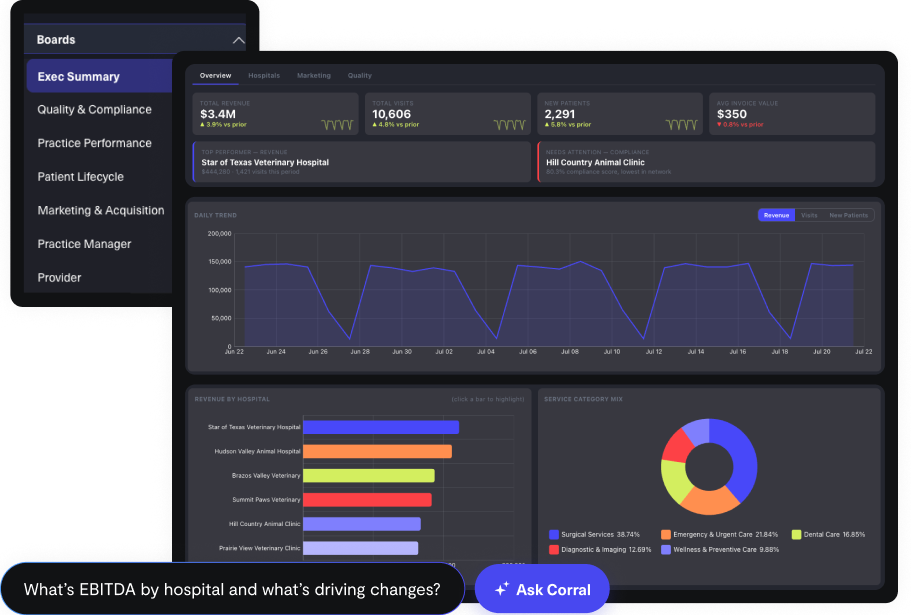
- Build tools based on your data. Tell AI to build you a churn-risk list that updates itself every week. A breakdown of which creative is actually driving bookings instead of just impressions. A scenario planner tool with sliders with real data for testing a price change against your real historical numbers. At CorralData, AskCorral builds these Data Apps from a prompt into a working tool, and the possibilities are endless.
All of the above are things CorralData customers do today with their connected data and AI, and what we rely on internally too. When you can trust an AI's answer because the data foundation underneath it is solid, the value isn't just the time saved. It's what that time gets spent on instead, less time double-checking numbers, more time actually growing the business.
And that only pays off if agentic analytics isn't locked to the handful of people who know how to write a query. The organizations that get the most out of this are the ones where anyone can ask a governed, trustworthy question, not just the analytics team. Limit it to a few people, and you've limited the return on the work it took to build the foundation in the first place.
Agentic analytics is half of a bigger capability
At CorralData, this is half of a larger capability. The full loop runs Detect, Recommend, Execute, Measure. The broader category, agentic AI, goes further than analytics alone. It extends into autonomous actions, executing on that recommendation directly inside the tools that run the business like sending the campaign, adjusting paid media budgets, filling the schedule gap, etc. Book a demo to learn more about how our AI not only analyzes, but also acts.
Fully adopting agentic analytics is one of the more impactful moves an organization can make. AI that analyzes and recommends means faster, better-grounded decisions, and it frees people up to spend their time on strategy and real work instead of pulling together reports and reconciling numbers by hand.